14 hr
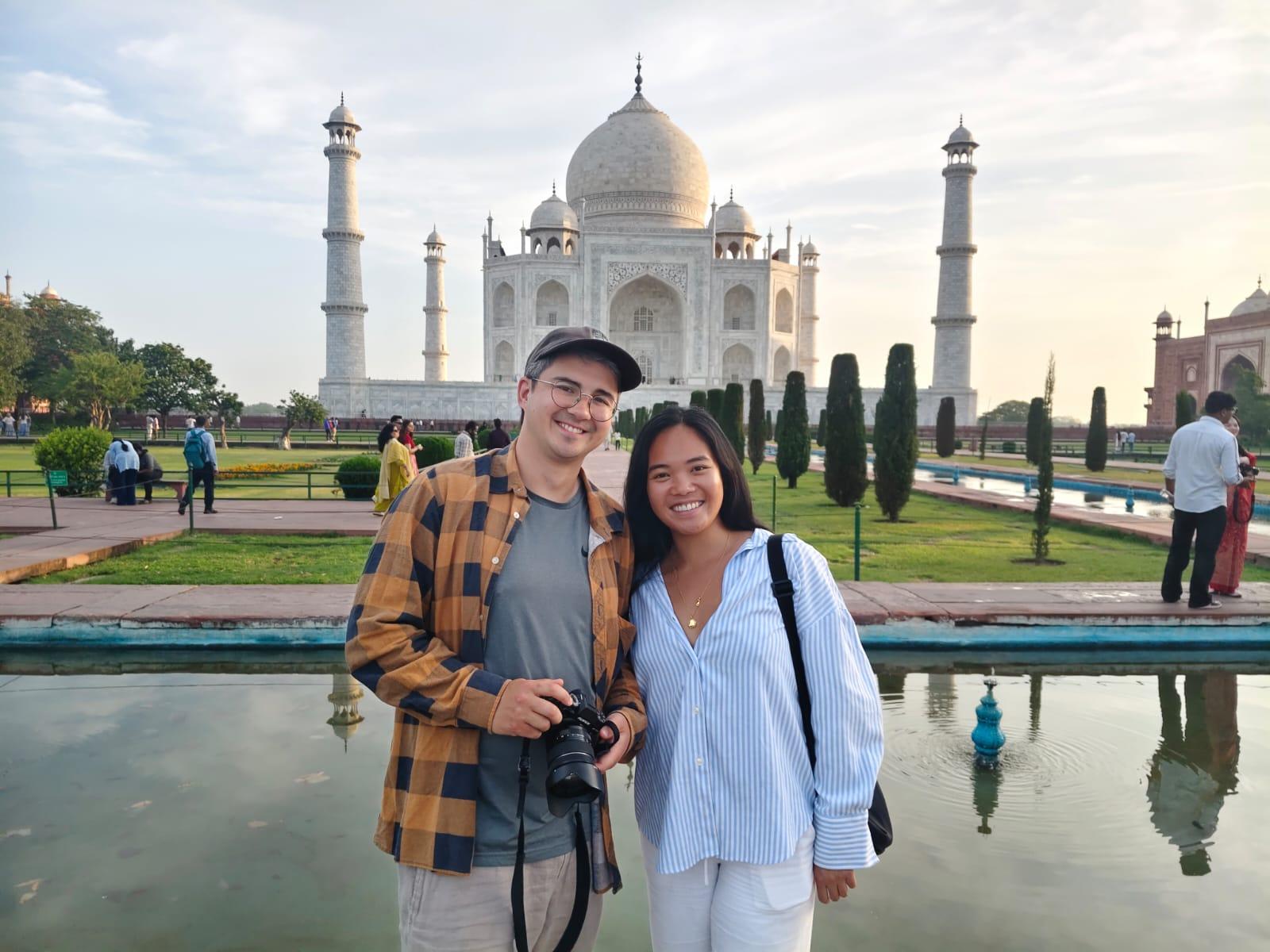
Taj Mahal Sunrise Tour from Delhi with Elephant Care Center Visit
- Expert local guide
- Small group
- Skip-the-line access
- Free cancellation
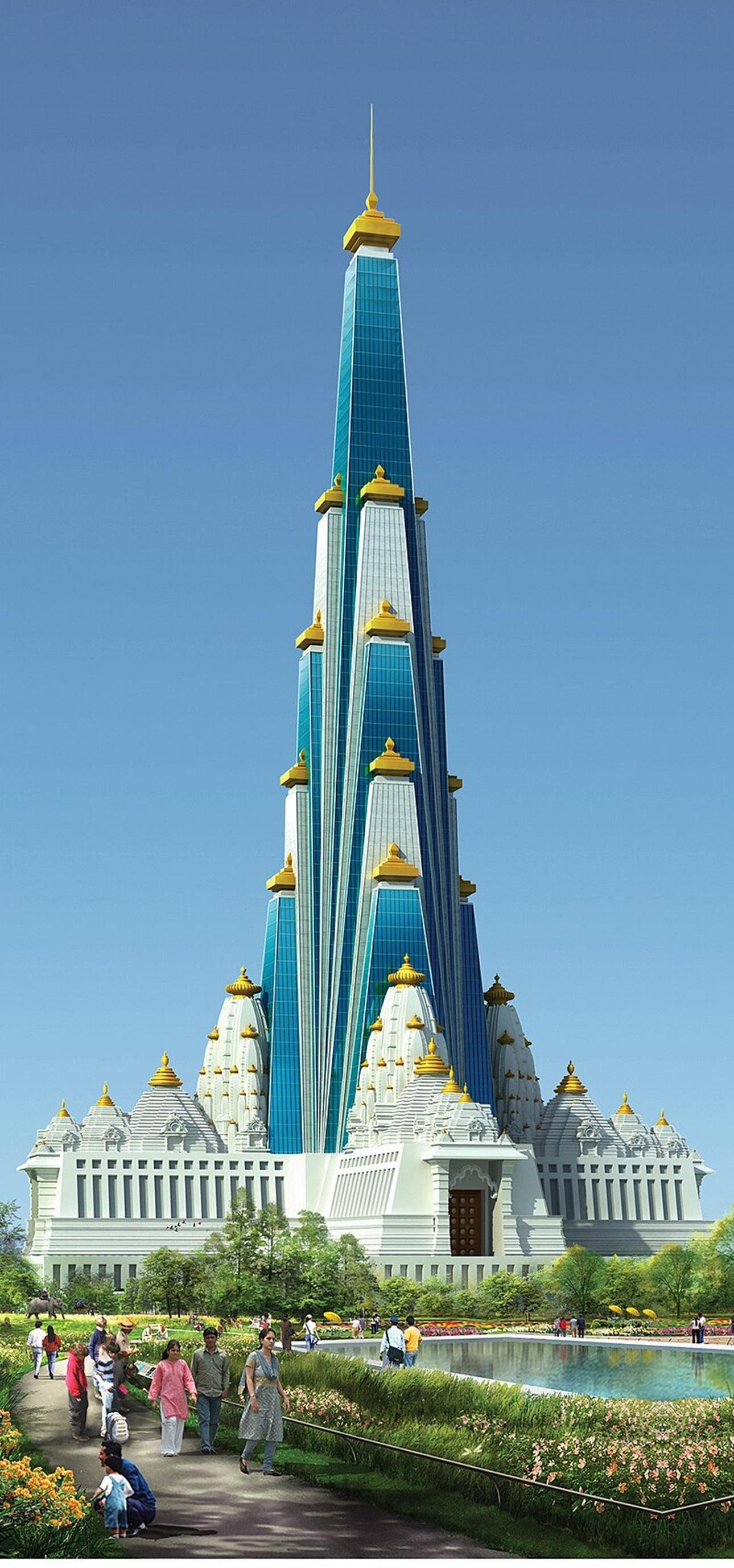
Prem Mandir Vrindavan Tickets — Free Entry, Evening Aarti & Guided Temple Walks
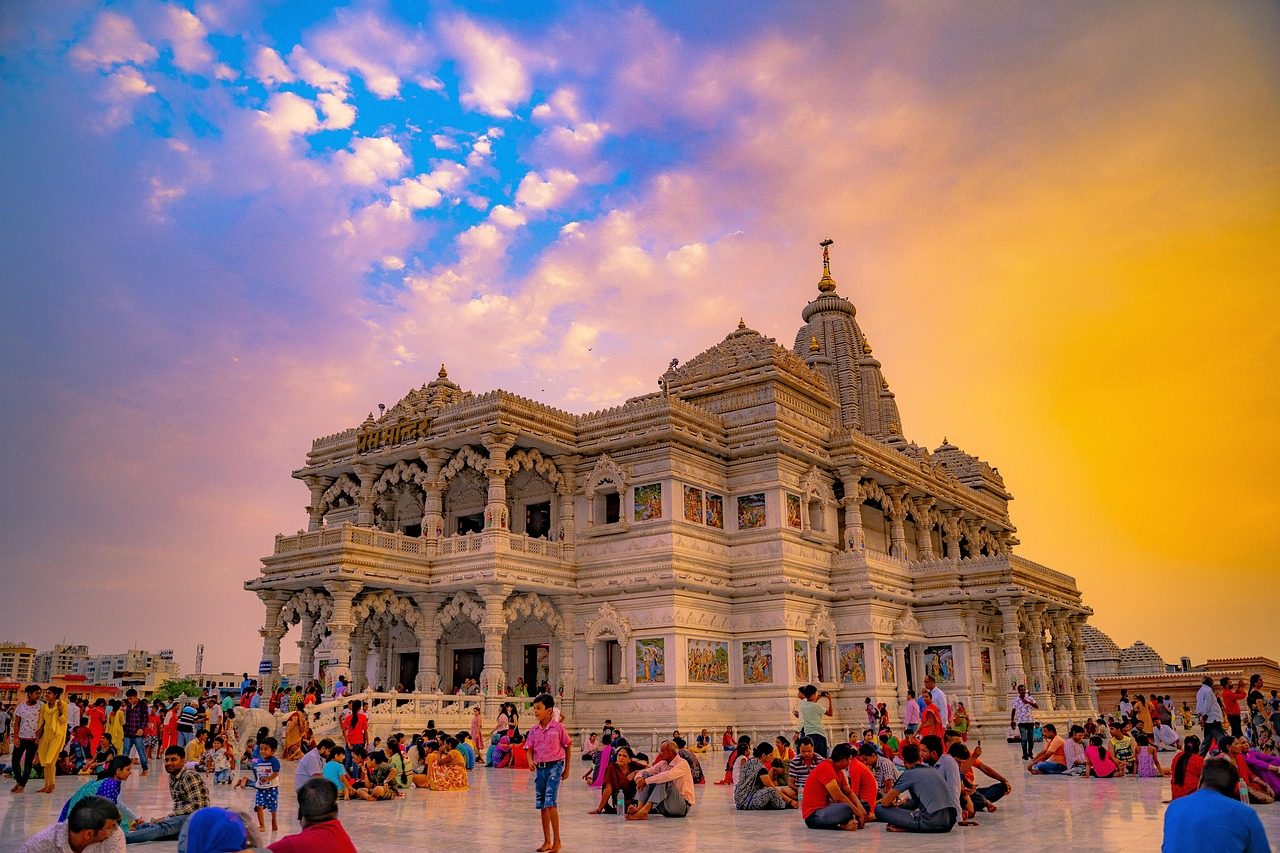
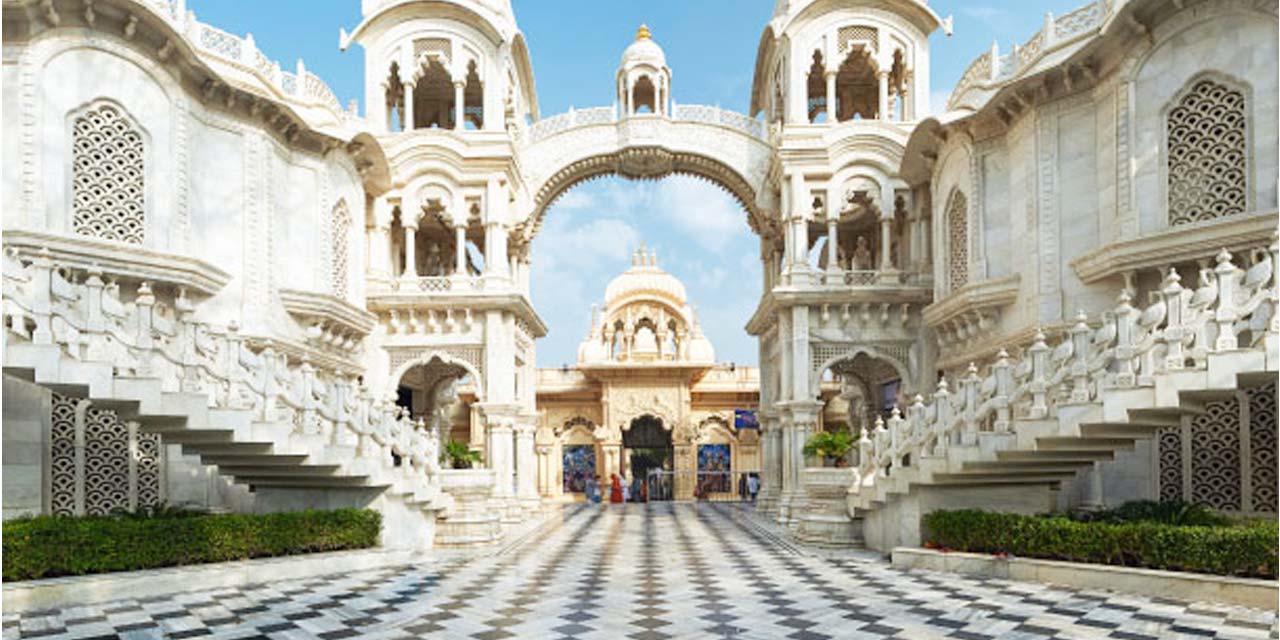
Marble carved by hand, light poured over water at dusk.
Compare fares, pick the fit — all bookings are mobile-voucher and eligible for free cancellation where shown.
14 hr
12 hr
10 hr
| Experience | From | Duration | Rating | Transfers | Pickup | Free cancel. | Price | |
|---|---|---|---|---|---|---|---|---|
|
Guided Experience
Most popular
Taj Mahal Sunrise Tour from Delhi with Elephant Care Center Visit
|
Delhi | 14 hr | ★ 5.0 | ✓ | ✓ | ✓ | €30 | Book → |
|
Luxury / Private
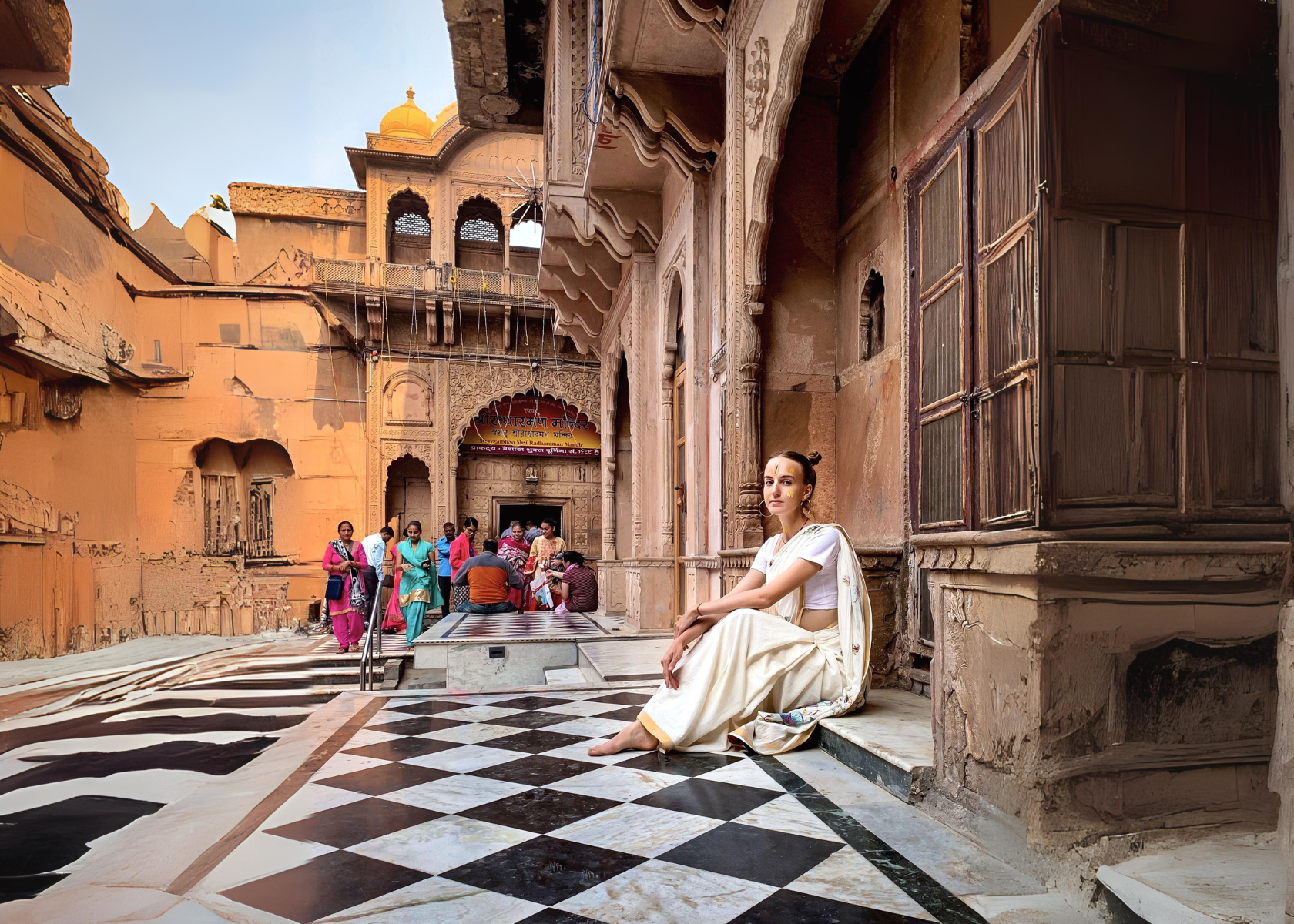
Delhi to Taj Mahal & Mathura-Vrindavan Private Day Tour
|
— | 12 hr | ★ 5.0 | ✓ | ✓ | ✓ | €27 | Book → |
|
Guided Experience
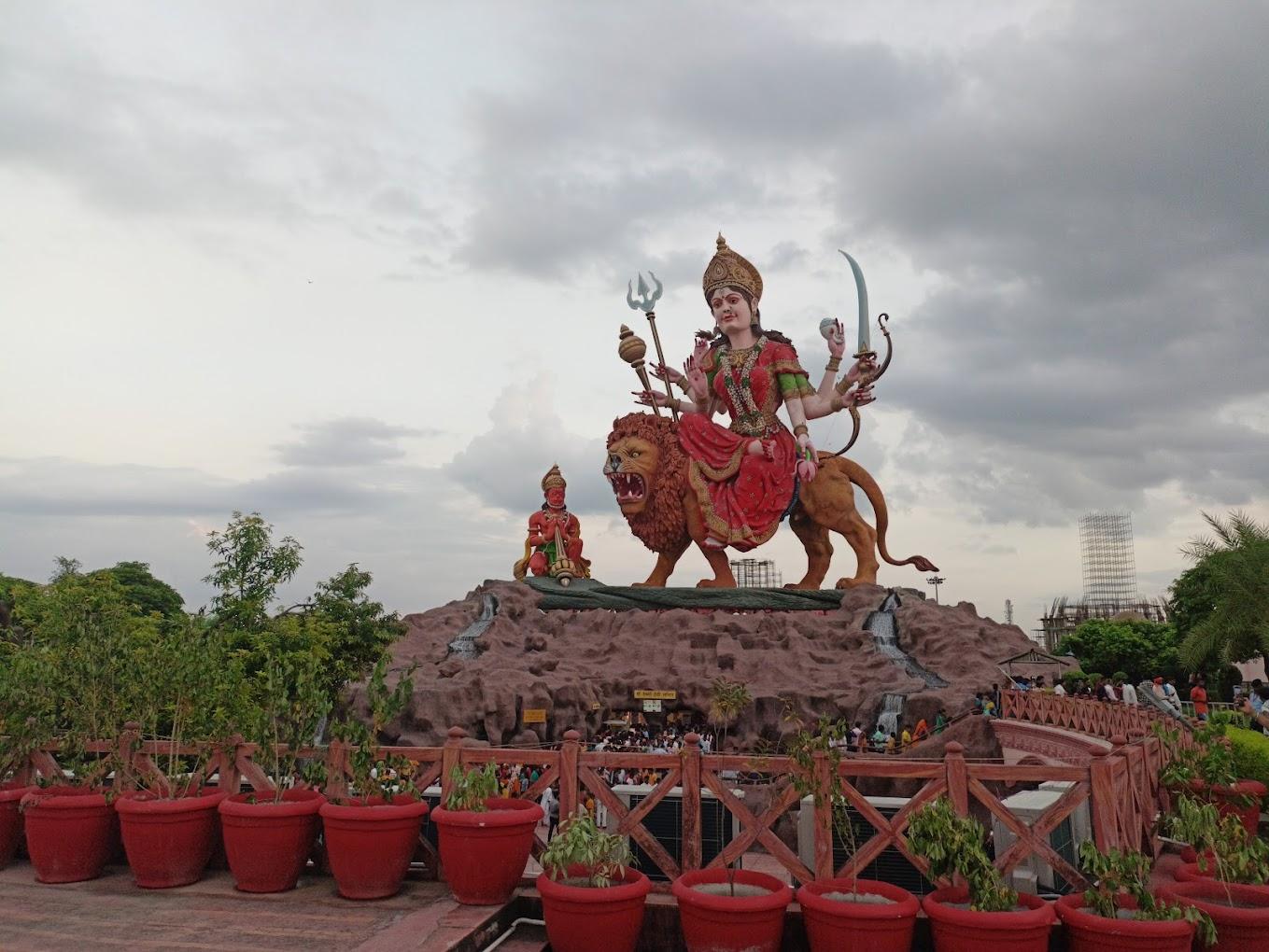
Mathura & Vrindavan Full-Day Trip from Delhi with Lunch
|
Delhi | 10 hr | ★ 5.0 | — | ✓ | ✓ | €36 | Book → |
Most visitors doing a Prem Mandir Vrindavan Tickets tour pair it with Banke Bihari Temple in one day, and the general rule is simple: catch Banke Bihari's morning curtain darshan first, then close the evening with Prem Mandir's light and fountain show.
|
Top pick Prem Mandir |
Banke Bihari Temple | |
|---|---|---|
| Age and history | Opened 2012, built by Jagadguru Kripalu Trust | Built 1864, founded by Swami Haridas |
| Style of experience | Marble architecture with light and fountain show | Jhanki darshan — curtain opens every few minutes |
| Best time to visit | 16:30–18:00 for evening aarti and fountains | 7:45–9:00 AM (summer) for calm darshan |
| Photography rules | Allowed in gardens and most areas | Prohibited throughout the entire interior |
| Typical duration | 1–1.5 hours | 30–45 minutes |
| How they connect in one trip | Evening finale after old-town temple circuit | Morning darshan, first stop of the day |
| See tickets & prices |
Verdict: Neither replaces the other — Banke Bihari delivers the older, more intense devotional darshan, while Prem Mandir offers the more visually dramatic evening spectacle, and sequencing Banke Bihari at sunrise with Prem Mandir at dusk covers both without rushing either.
Hand-picked experiences loved by thousands of travelers
10 - 12 hours
Free Cancellation
Private guided day trip through Krishna's birthplace and childhood home, temples, and evening aarti.
10 - 12 hours
Free Cancellation
Full-day private temple tour through Krishna's birthplace and childhood home, with AC car and guide included.
1 day
Free Cancellation
Private one-way pilgrimage tour from Jaipur through Krishna's sacred cities, ending in Agra.
2 days
Free Cancellation
Sunrise Taj Mahal, Agra Fort, Mehtab Bagh sunset, plus a spiritual day in Mathura and Vrindavan.
10 hours
Free Cancellation
A private, chauffeured luxury day trip to Krishna's sacred birthplace and Vrindavan's holiest temples.
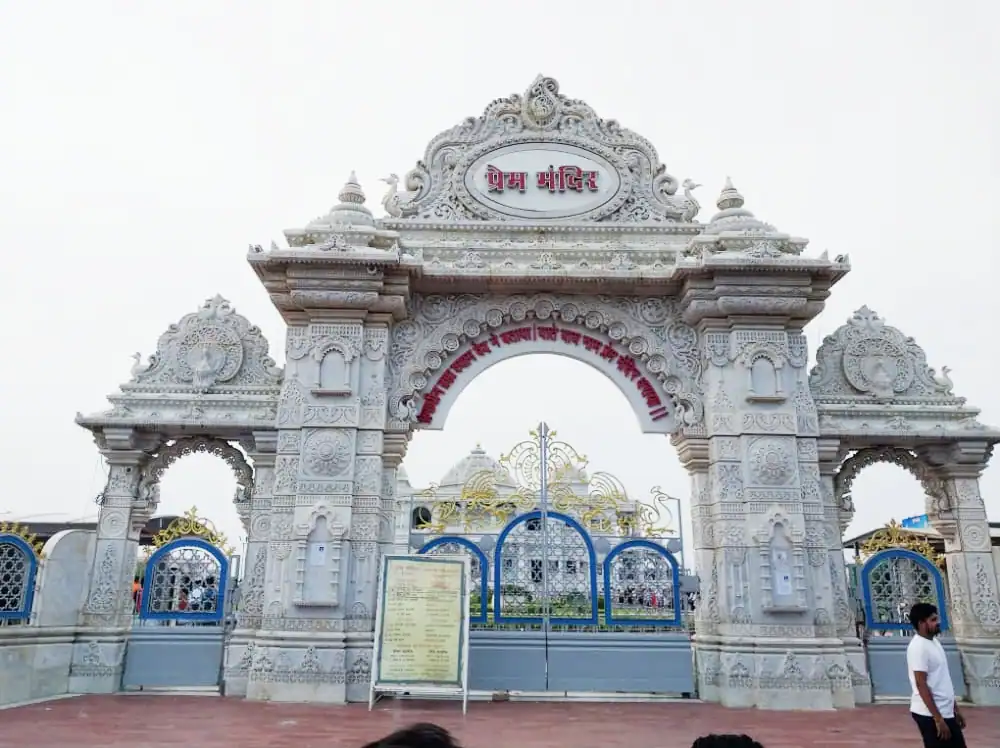
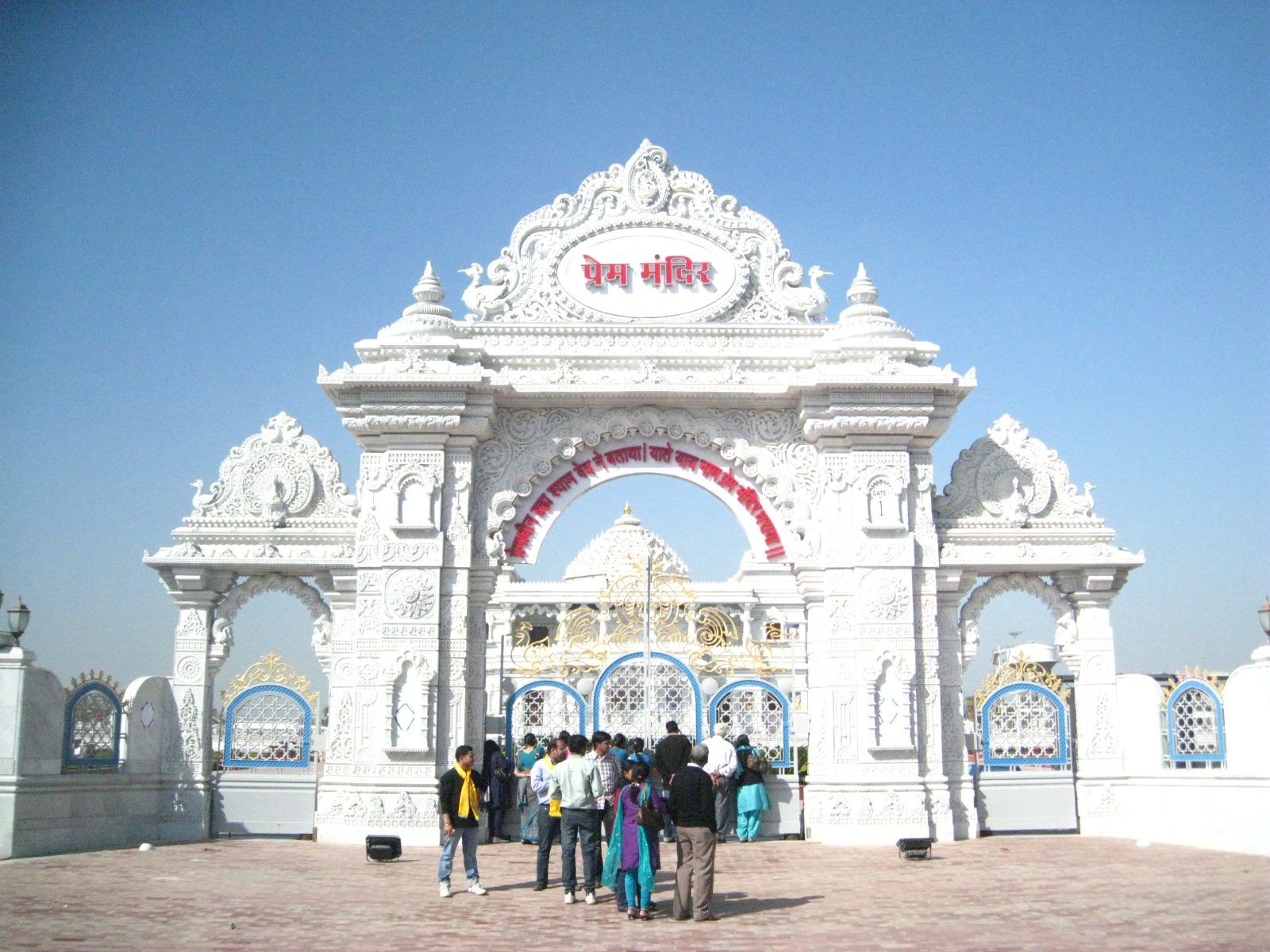
Pass through security screening and remove footwear at the main gate on Sri Kripalu Maharaj Ji Marg
Walk the landscaped paths and outer colonnades surrounding the temple
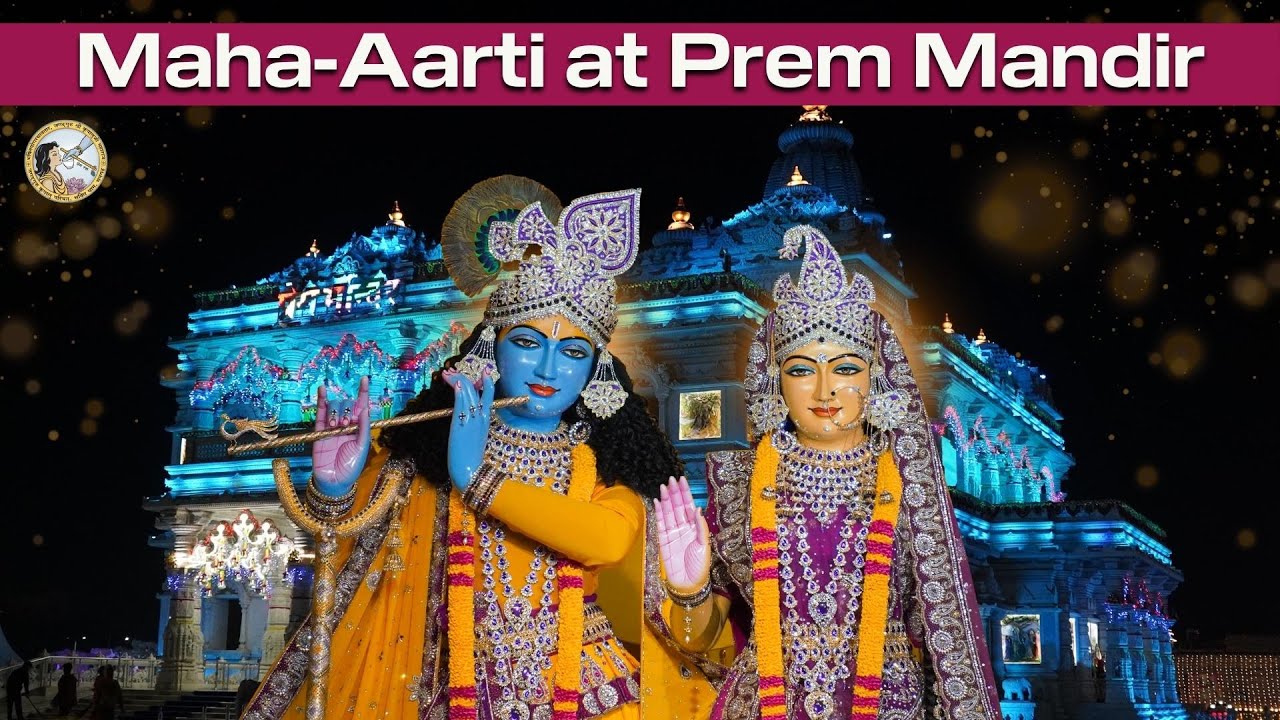
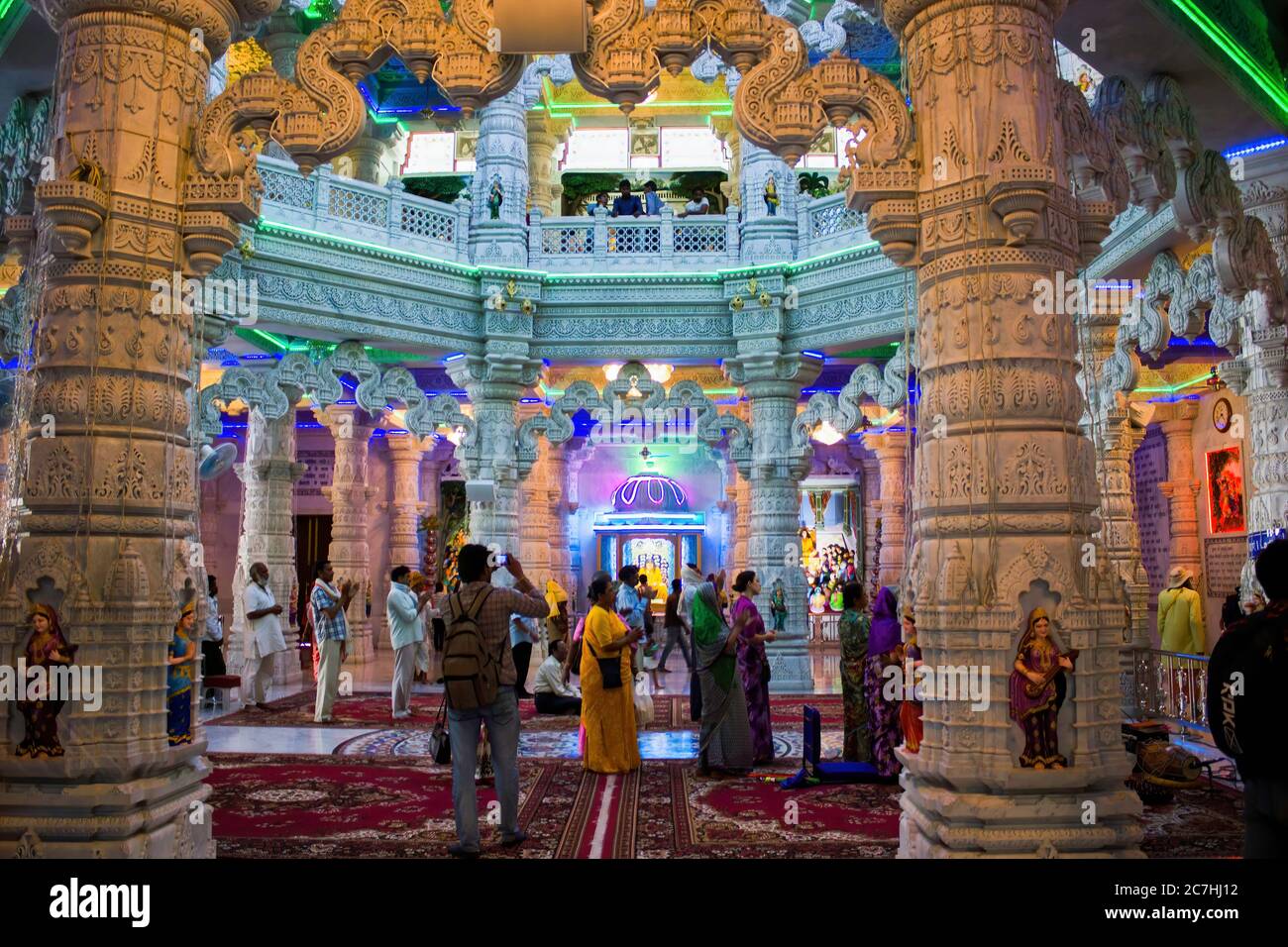
View the Radha-Krishna and Sita-Ram deities inside the white marble sanctum
Join the Sayan aarti before the temple lights change color after sunset
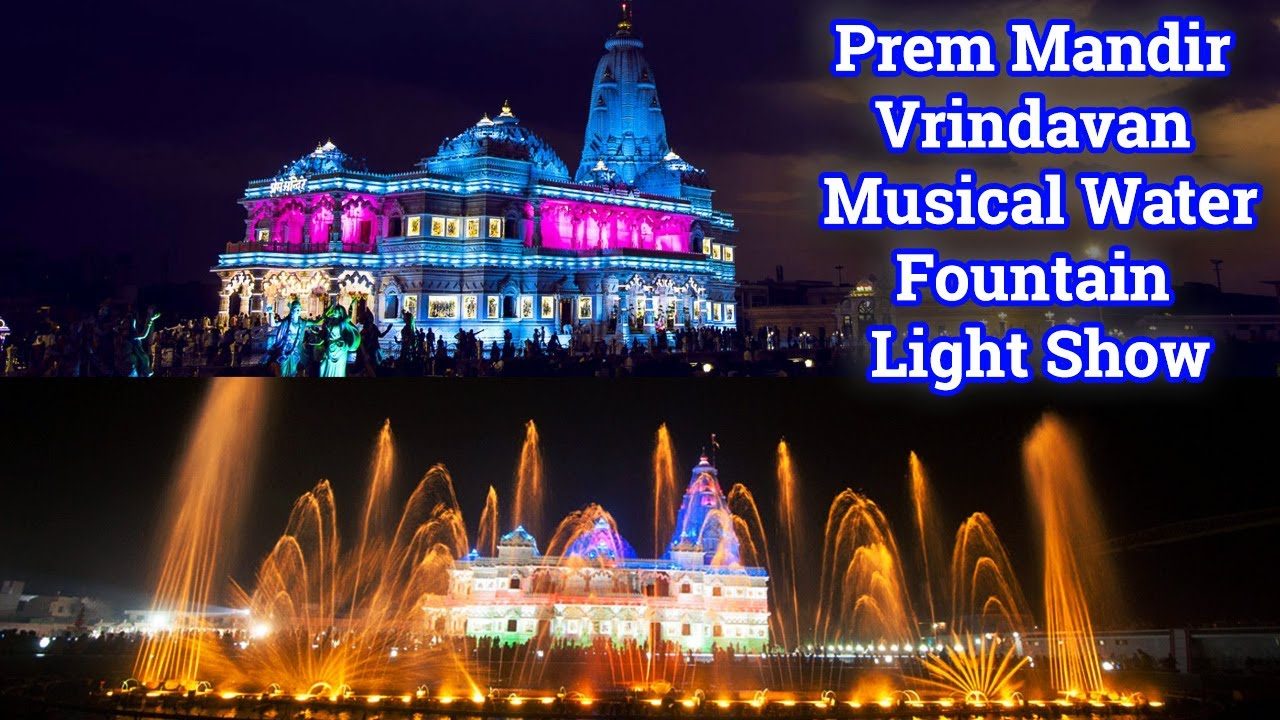
Watch choreographed fountains and lighting synced to devotional music
Head toward ISKCON Temple or Banke Bihari Temple for further Vrindavan sightseeing
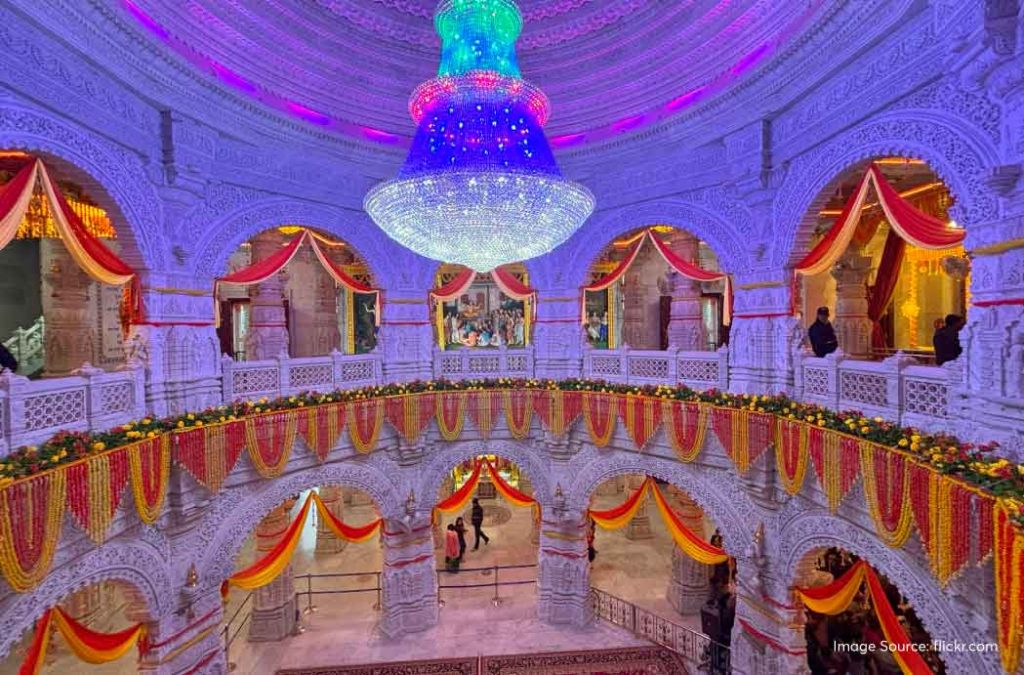
Houses the central Radha-Krishna and Sita-Ram deities carved from marble, set beneath an elaborately detailed ceiling depicting Krishna's life episodes. The chamber draws the steadiest stream of visitors during the 16:30–20:30 evening window.
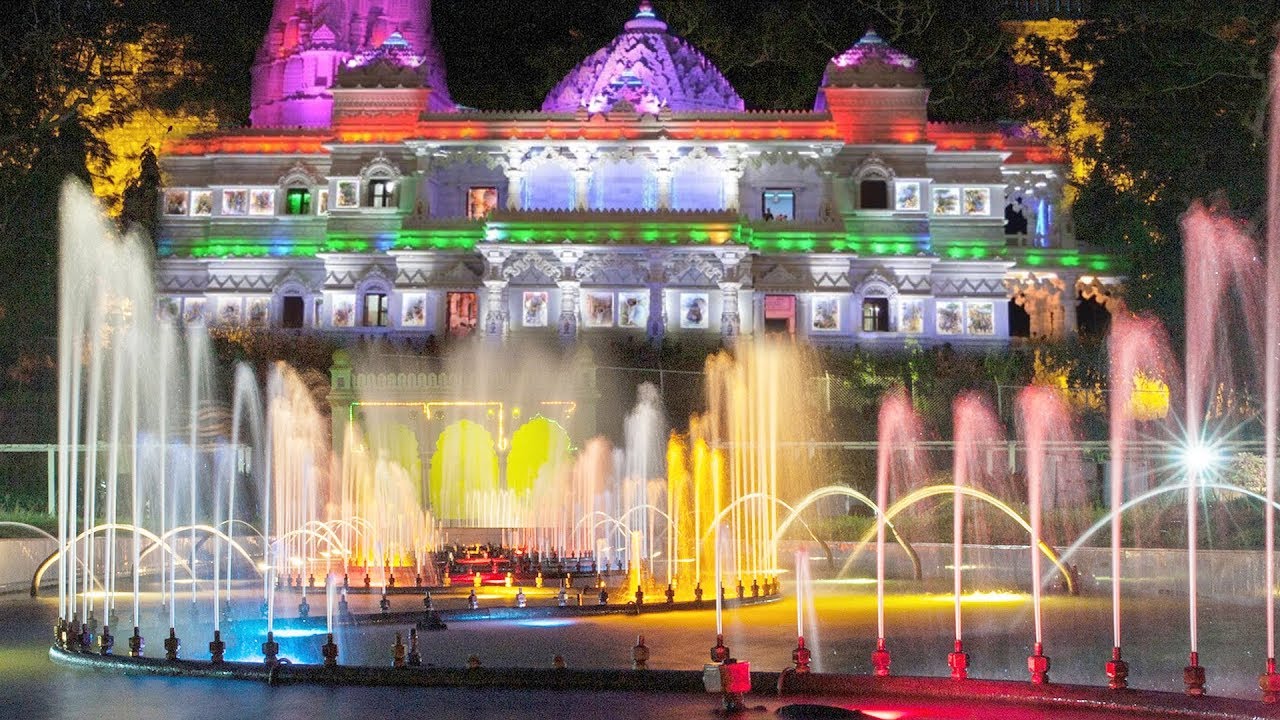
An open plaza where choreographed water jets and colored lights perform in sync with devotional music each evening. The show typically runs for about 30 minutes after sunset, drawing some of the largest evening crowds in Vrindavan.
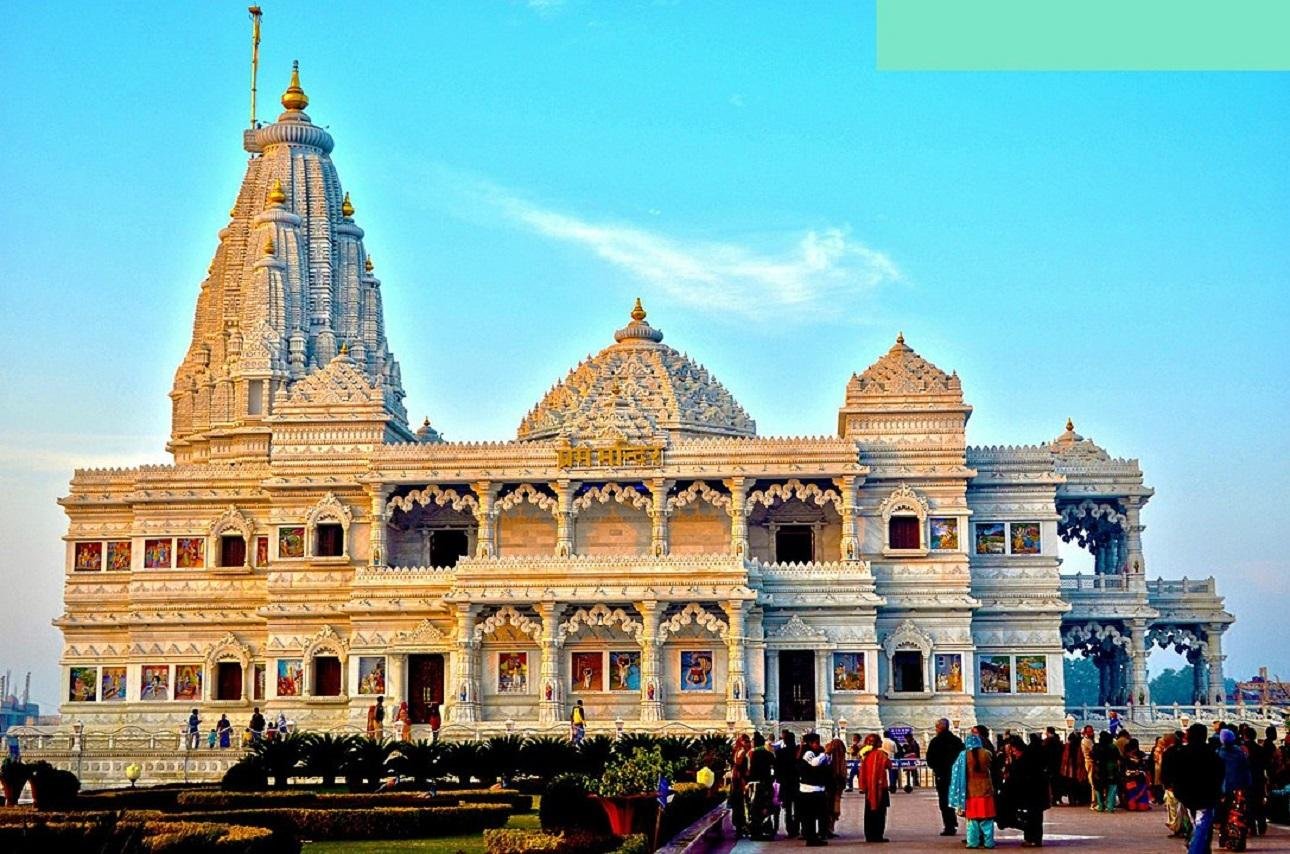
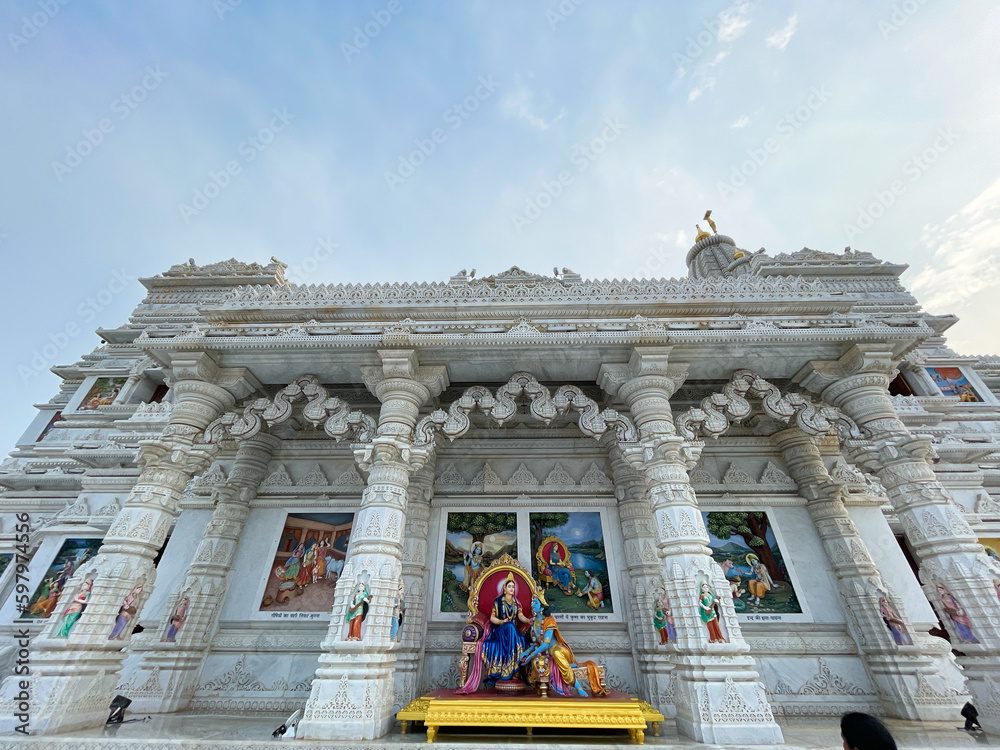
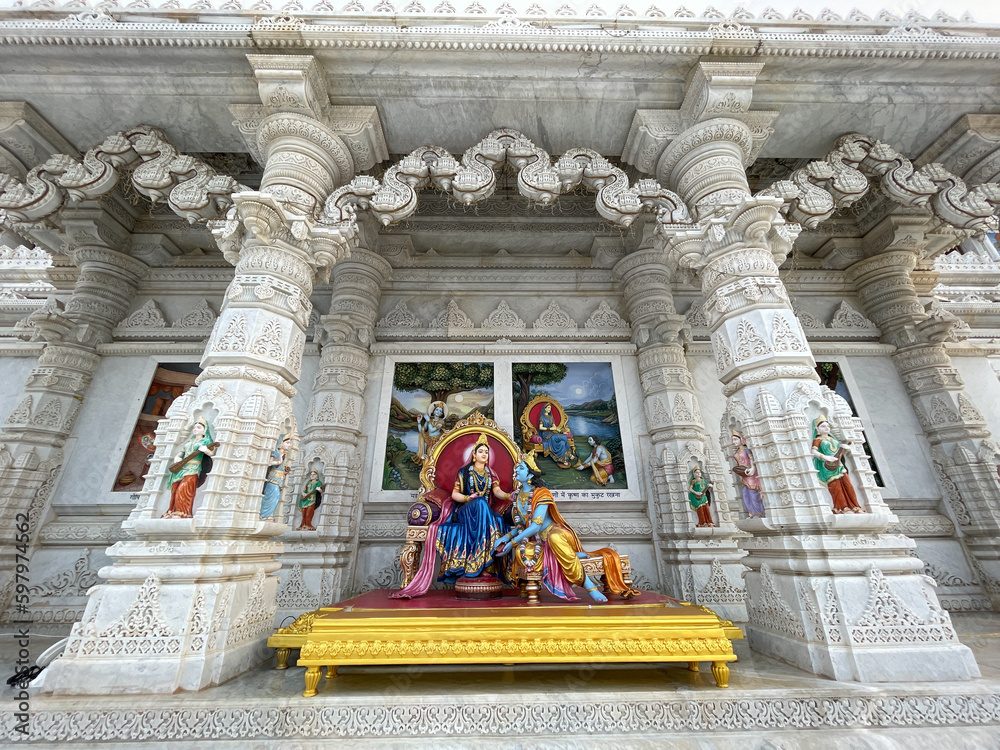
Life-size sculpted scenes lining the temple exterior depict episodes such as the Raas Leela and Govardhan Leela in fine white Italian marble relief work. The carvings took years to complete as part of the temple's roughly eleven-year construction period.
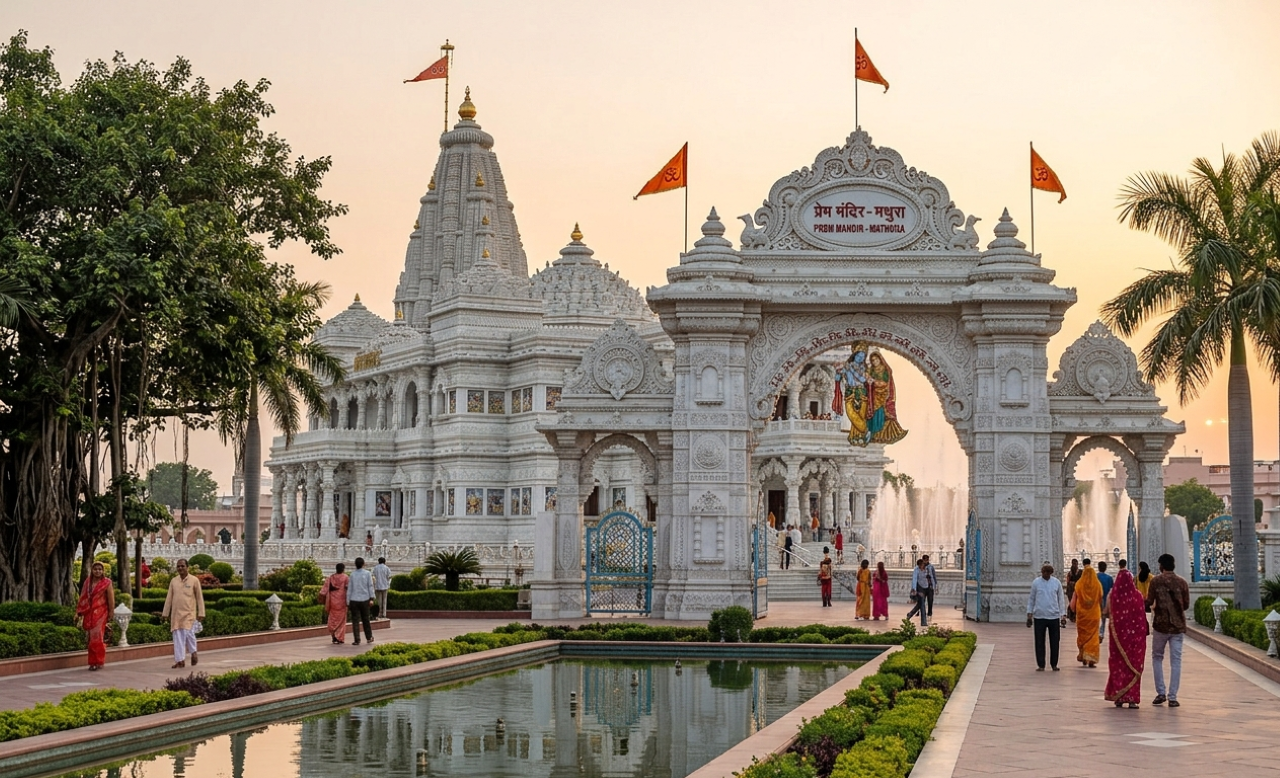
Manicured lawns and pathways surround the temple, offering shaded walking routes and framed views of the illuminated marble structure at dusk. The gardens double as a gathering space before the evening aarti begins.
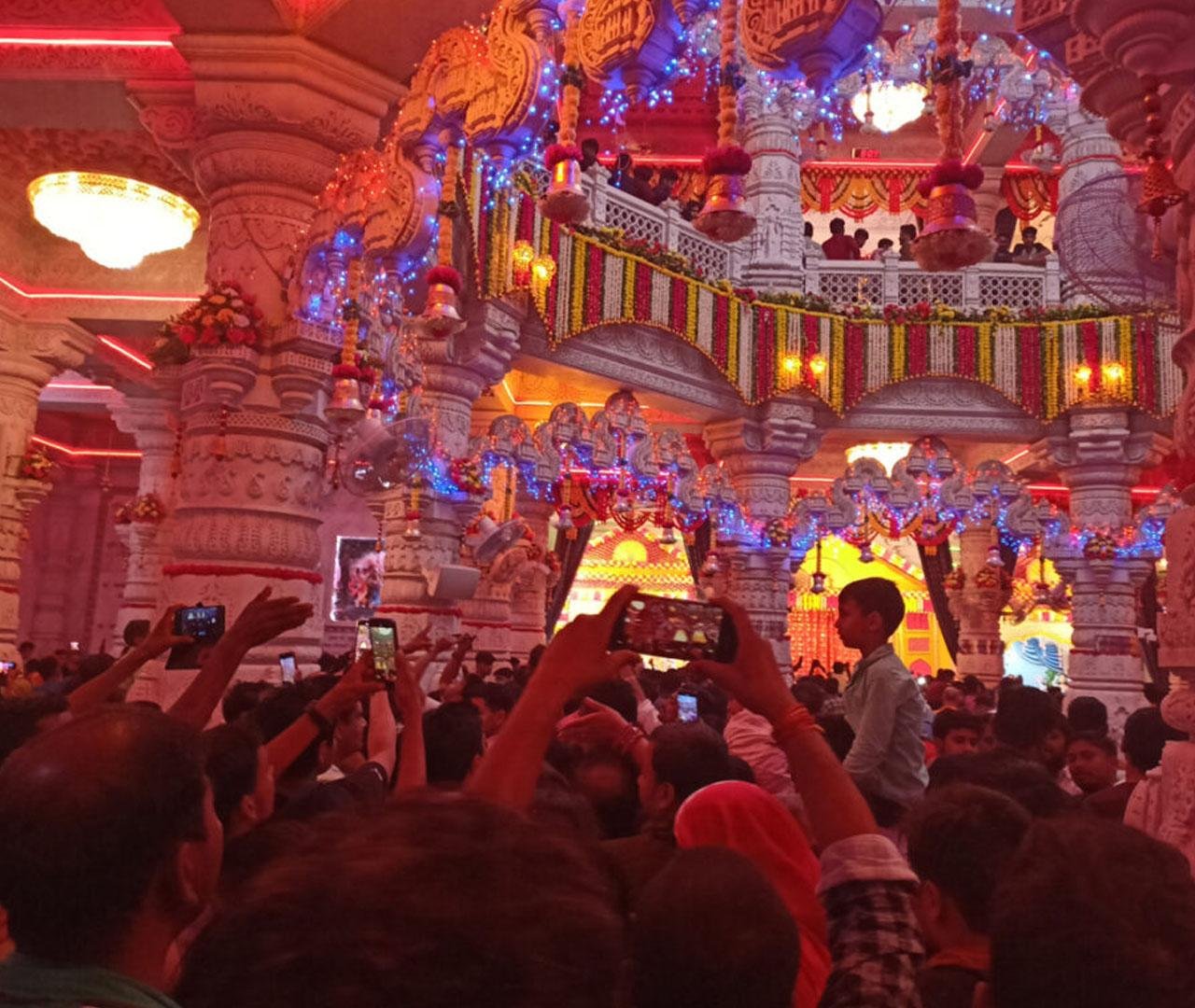
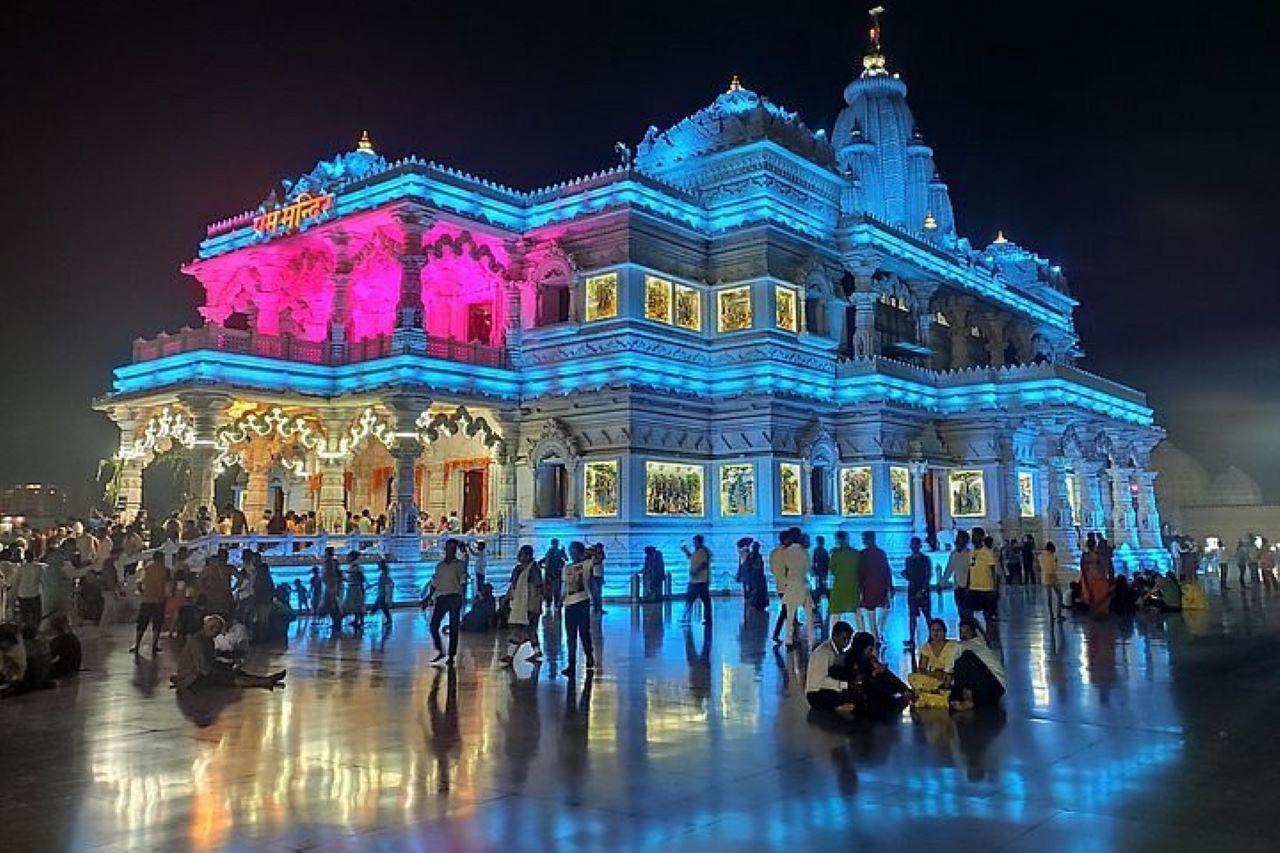
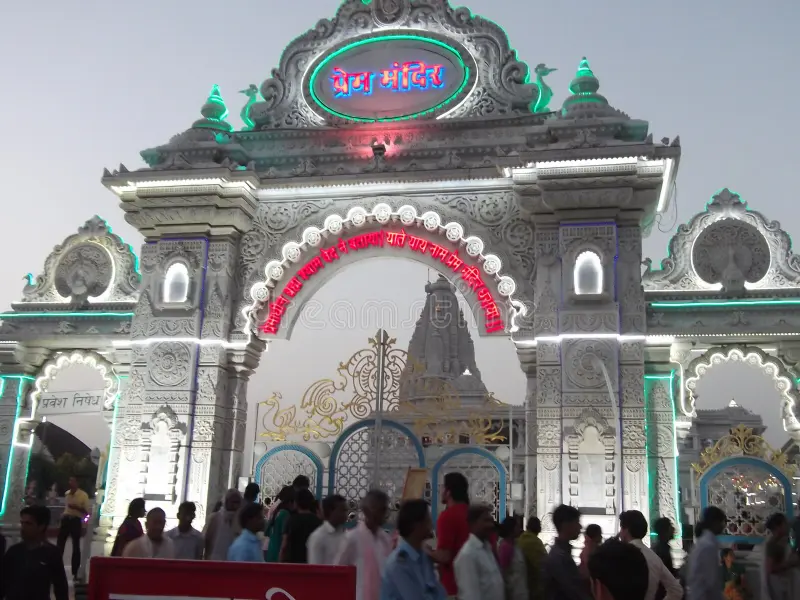
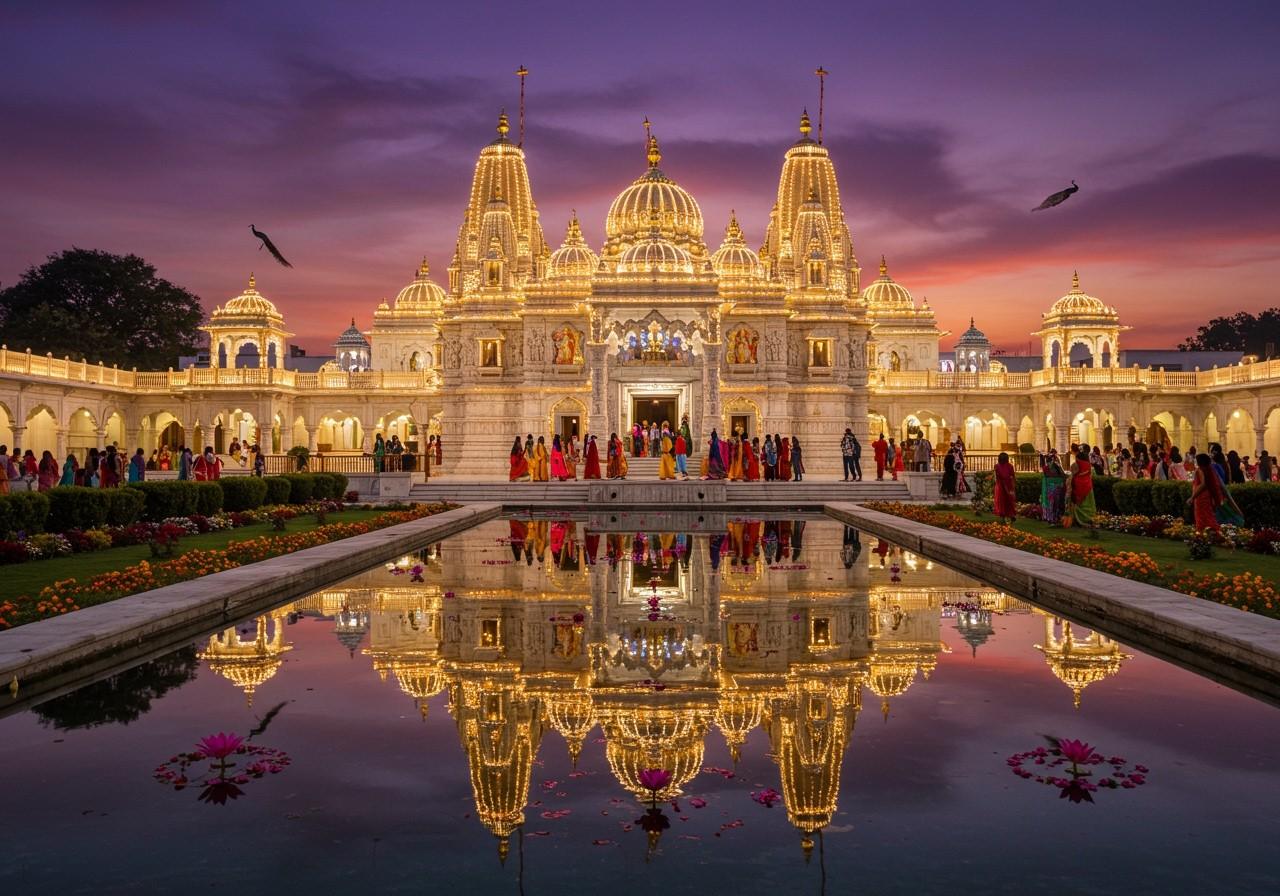
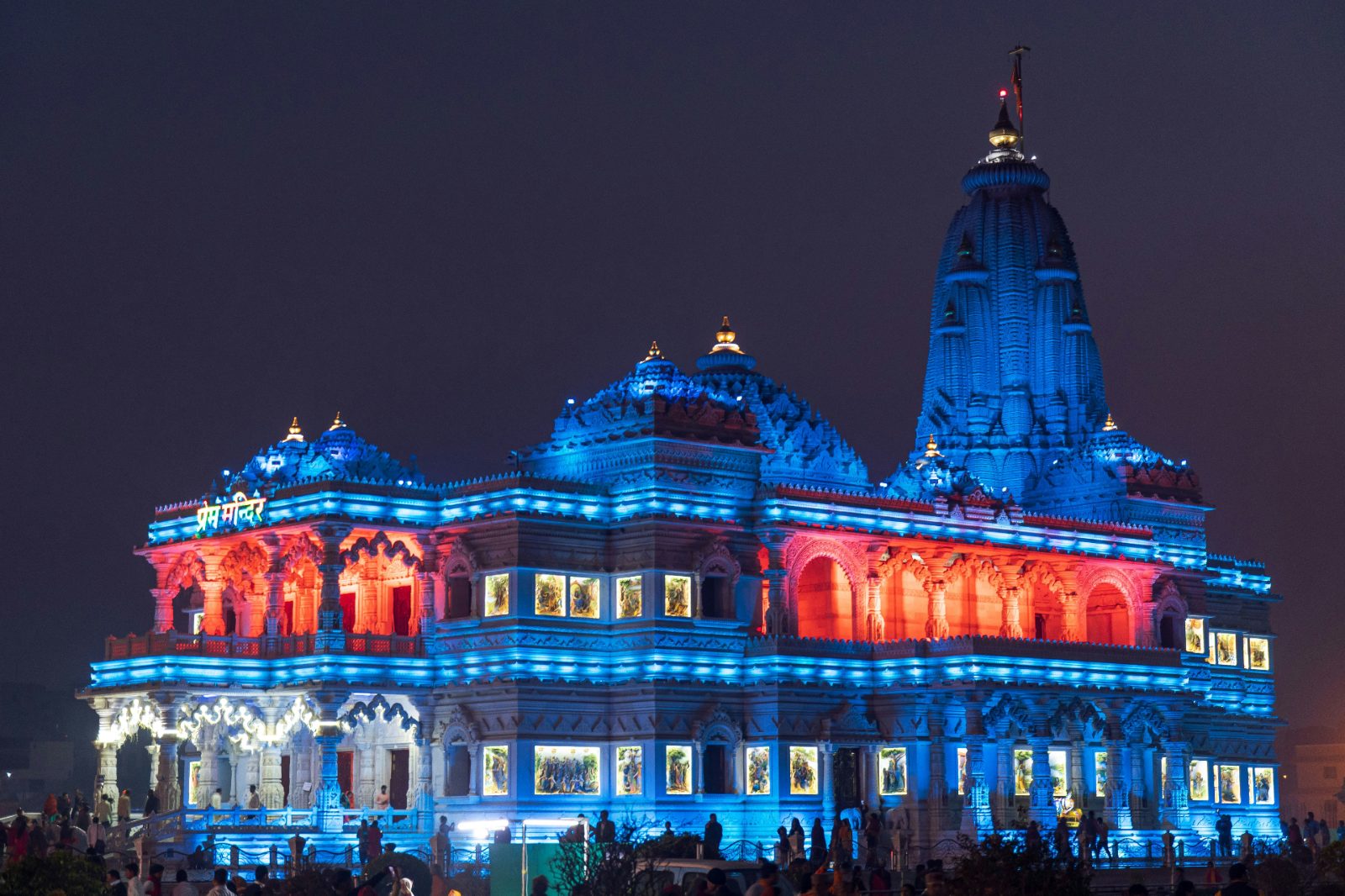
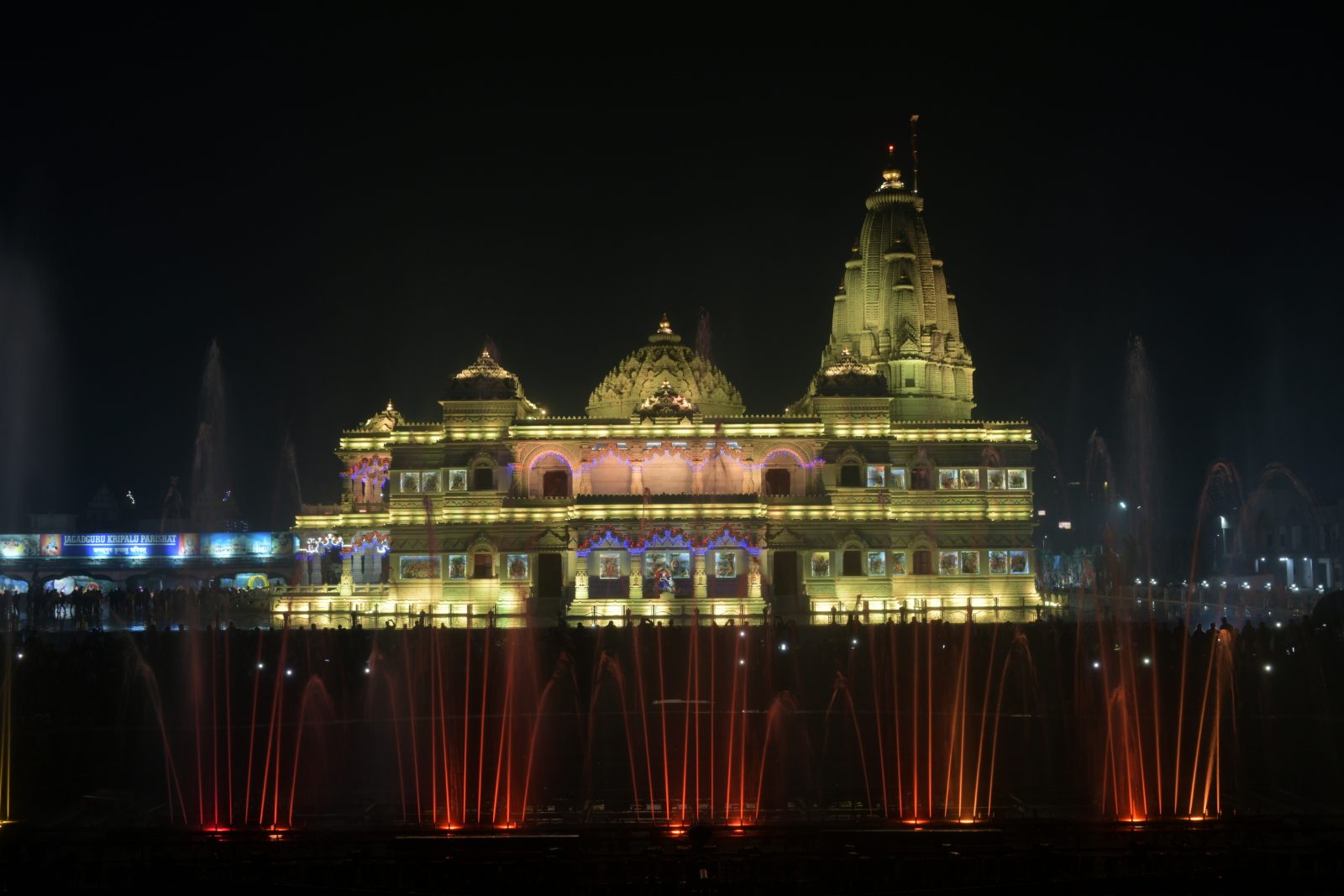
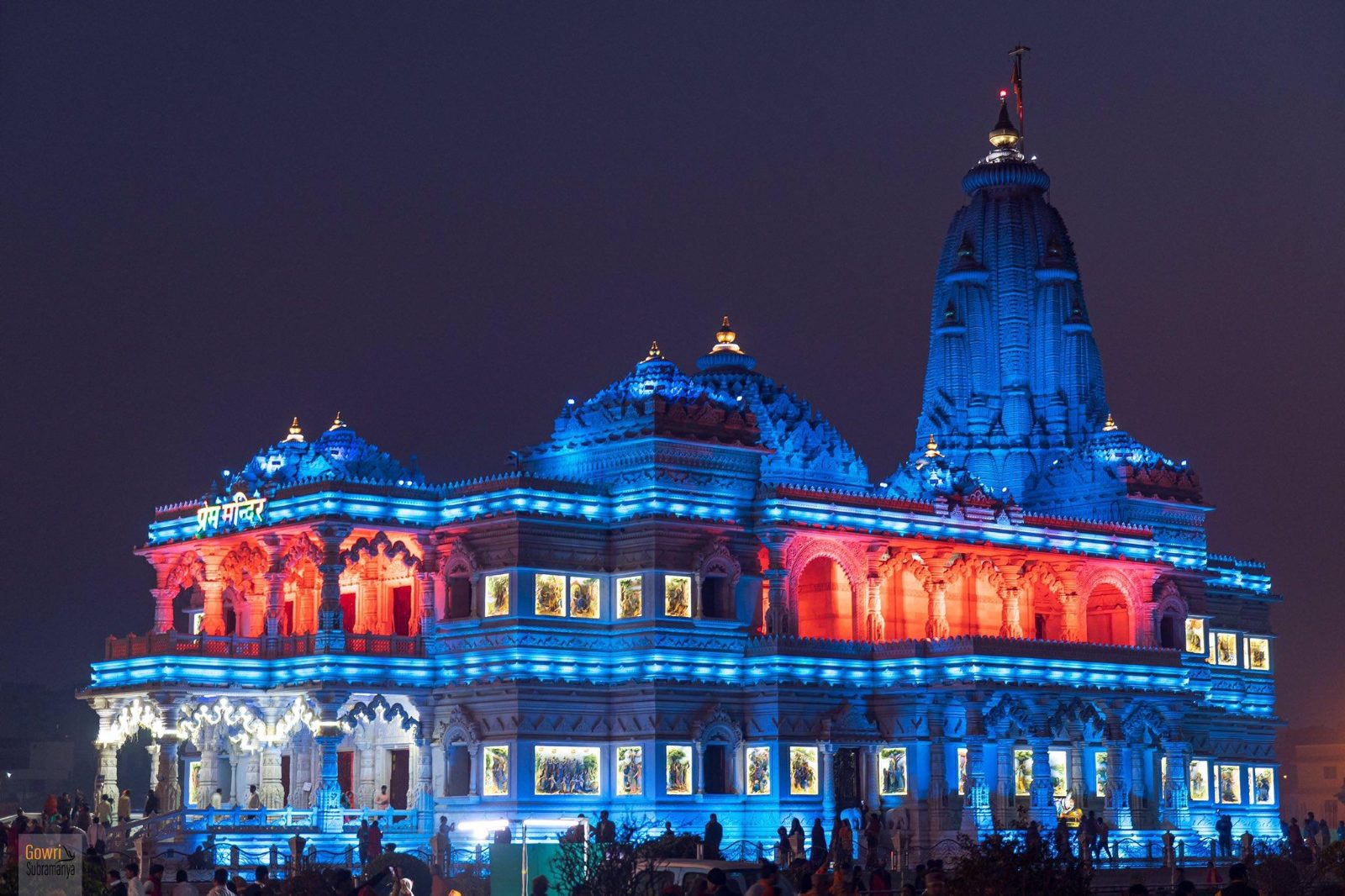
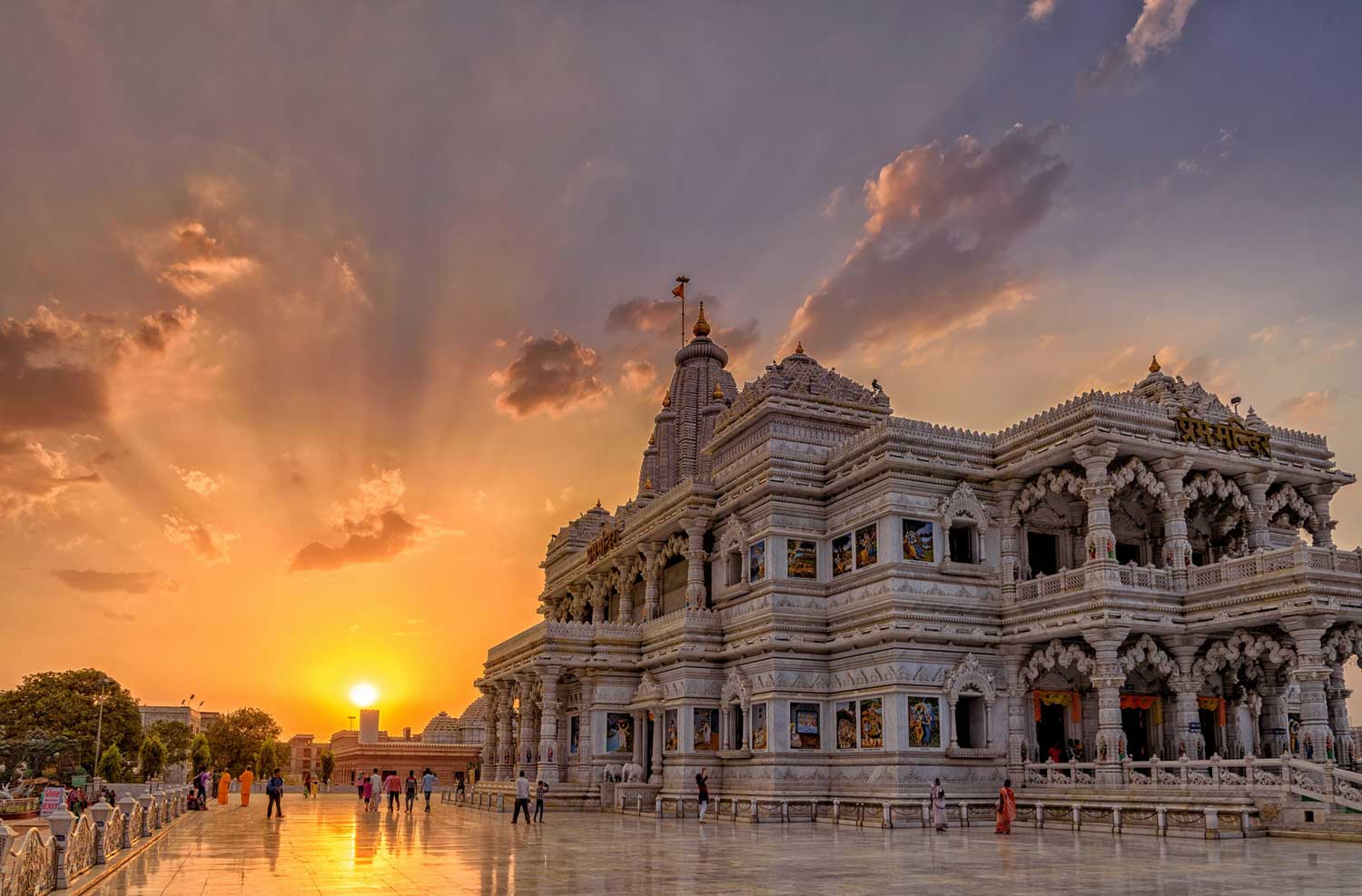
After sunset the entire white marble exterior is lit and gradually shifts through colors, becoming one of the most photographed features of any Vrindavan visit. The lighting sequence coincides with the evening aarti and fountain program.
A row of arched marble pillars marks the approach to the main courtyard, where security screening and footwear removal take place before entry. The colonnade sets the visual tone for the temple's broader white-marble architectural style.
You arrive on Sri Kripalu Maharaj Ji Marg between 16:30 and 18:00, which is the window worth planning around: the evening aarti and the musical fountain land together, and the crowd has not yet thickened.
Doors open at 08:30 and close at 12:00, then reopen at 16:30 and run to 20:30, so an afternoon arrival is the only one that catches the light show.
You leave your shoes at the counter, take the token, and walk barefoot across marble that has held the day's heat. The scale registers first — 125 feet of white stone, unshaded — then the detail: you slow along the outer wall to read the carved panels, 94 of them, each one an episode you may or may not recognise. You circle the ground-floor sanctum where Radha Krishna are enshrined, climb to the Sita Ram shrine above, and find the upper terrace gives you the whole garden at once.
By 19:00 you have positioned yourself facing the façade. The illumination begins, cycling the marble through colour, and the fountain answers it. You stay for that, then walk the landscaped hillocks where the Krishna stories are staged in three dimensions.
Nothing at the gate costs anything. You spend only on the auto back to town, on a bag of pedas from the lane, and — if you booked a Prem Mandir Vrindavan Tickets ticket product — on the driver waiting to take you to Banke Bihari next.
All the details about your upcoming adventure in one place
Built in Italian Carrara marble by Jagadguru Kripalu Ji Maharaj and opened to the public in 2012, this Braj-region shrine is dedicated to Radha Krishna and Sita Ram, with carved panels tracing episodes from the Bhagavata. Prem Mandir Vrindavan Tickets tours typically include the twelve-acre garden complex, the Satsang Hall, and the rotating evening illumination that shifts the facade through colour after sunset. A Vrindavan temple tour usually pairs the site with the surrounding Mathura landmarks along the Yamuna.
The temple weighs itself in stone: roughly 30,000 tonnes of Italian Carrara marble, cut in Rajasthan workshops and carried more than a thousand kilometres to a sandy stretch of Braj countryside.
Prem Mandir was consecrated in February 2012, the work of Jagadguru Kripalu Maharaj, whose name the approach road still carries.
That provenance matters because Vrindavan is not a marble town. It is a town of brick, of narrow lanes, of small dark shrines where the deity is close enough to touch with the eye. Prem Mandir broke that scale deliberately. Set on 54 acres at Raman Reiti, it rises 125 feet above ground that had been scrubland, and its white mass is visible from the Delhi–Agra approach long before the town itself resolves. Anyone weighing Prem Mandir Vrindavan Tickets against the cost of other Indian monuments finds the arithmetic unusual: the entrance fee is 0 INR, free entry, no admission charge, for a building whose stonework rivals anything ticketed elsewhere in the country.
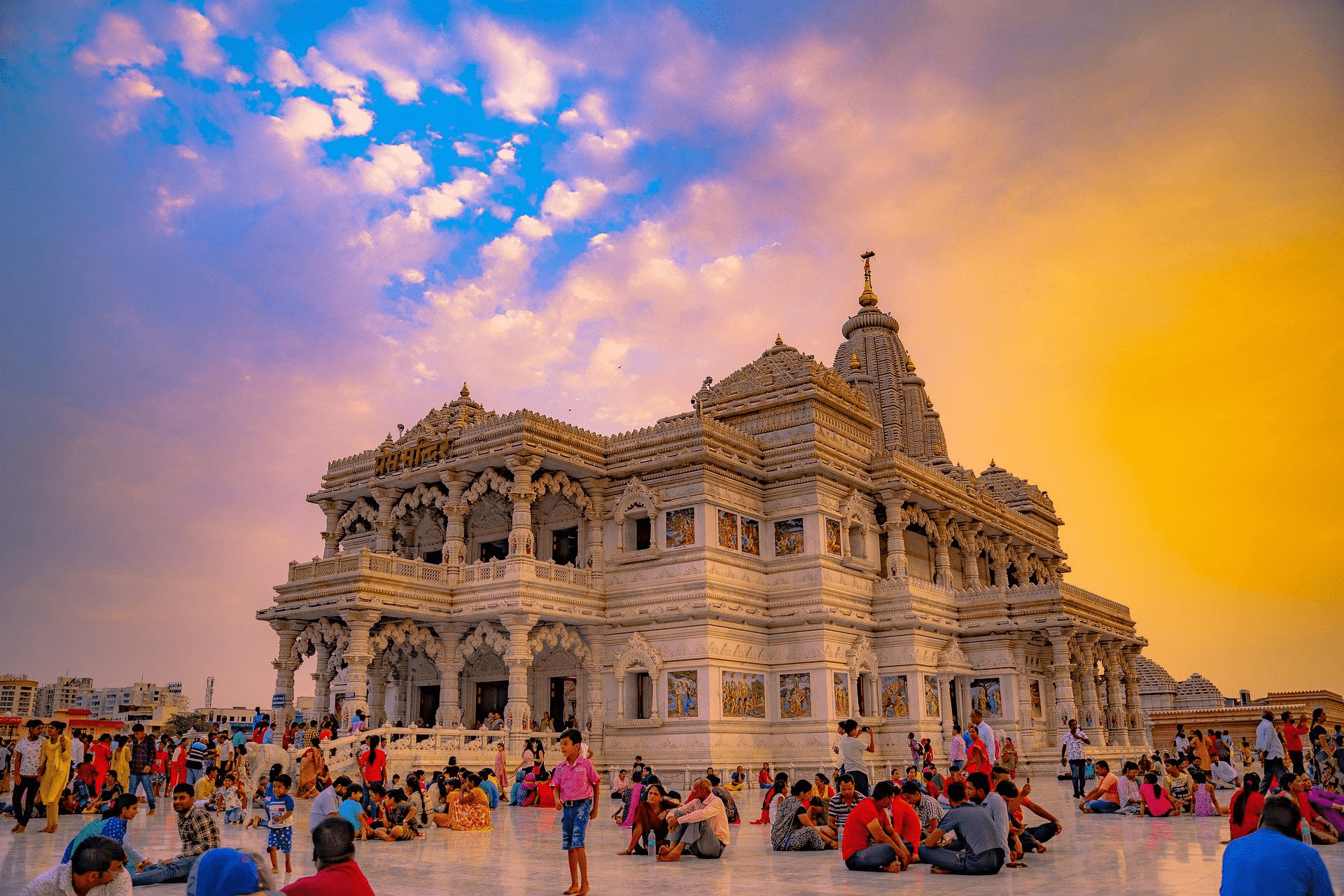
The architecture is narrative rather than decorative. The exterior carries 94 sculpted panels drawn from the lives of Radha and Krishna — Govardhan lifted on a fingertip, the raas leela in its circle, the butter-thief caught mid-reach. Inside, the ground floor enshrines Radha Krishna, the upper level Sita Ram; the pillars are worked in low relief so that the marble reads as textile rather than rock. Around the temple, artificial hillocks stage the same episodes at garden scale, and a musical fountain plays into the evening while the façade shifts through coloured illumination.
What gives the place its present weight is its position within Braj pilgrimage. Vrindavan holds several thousand temples, most of them centuries older, and Prem Mandir is by some distance the youngest of the famous ones. It functions as an entry point: visitors who arrive knowing nothing of Vaishnava theology leave with the essential stories in visual form, then continue to Banke Bihari, Nidhivan, or across the Yamuna to Mathura. That role is why Prem Mandir Vrindavan Tickets tours are so frequently bundled with wider Vrindavan temple itineraries rather than sold alone.
On value, the judgement is simple. The temple charges nothing at the gate. Paid products exist only where they add logistics — vehicles, guides, the Mathura–Govardhan circuit, priority handling on festival evenings. A Prem Mandir Vrindavan Tickets tour is therefore a purchase of transport, context, and someone else's knowledge of the lanes, not of access. Judged that way, the guided products are reasonable and the temple itself is among the most generous major landmarks in northern India.

Thirty thousand tonnes of Carrara marble, and not one rupee at the gate.
Modest, shoulder-and-knee-covering clothing is expected for both men and women when visiting Prem Mandir; sleeveless tops and short shorts are discouraged inside the main sanctum. Footwear must be removed before stepping onto the marble courtyard, so slip-on shoes make the process easier.
Bag checks and metal-detector screening are carried out at the entrance gates on Sri Kripalu Maharaj Ji Marg before visitors reach the main courtyard. Large backpacks and bulky bags are best left at the hotel, since only small handbags typically pass through security quickly.
Photography and mobile phone cameras are permitted across the outer courtyards, gardens, and around the musical fountain, making evening visits popular for pictures of the illuminated marble facade. Photography is restricted inside the inner sanctum housing the Radha-Krishna and Sita-Ram deities out of respect for the darshan ritual.
Children are welcome throughout the grounds and gardens, and the musical fountain show is a family favorite in the evening slot. Strollers can be used on the paved courtyard paths, though they should be folded before entering the sanctum area.
The complex has level marble flooring and ramped access across most of the courtyard, gardens, and viewing areas around the fountain. Wheelchair users may find some sections busy during evening aarti, so arriving slightly ahead of the 16:30 reopening eases movement.
No food stalls or restaurants operate inside the temple premises, and eating is not permitted within the marble courtyard or sanctum. Small water bottles are generally allowed, and visitors typically eat at nearby Vrindavan eateries before or after their visit.
Quiet mornings, busier evenings
Some weekly satsang activity
Crowds build ahead of weekend
Heaviest evening footfall
Busiest day overall
Hours
Open daily 08:30–12:00 and 16:30–20:30
Opening hours
08:30 – 12:00, 16:30 – 20:30
Getting there
City-center access via metro and bus
Accessibility
Most experiences are wheelchair-friendly — check individual tours
What to bring
Comfortable shoes, water, phone for mobile voucher
Car · 20-25 minutes from Mathura · ₹300-600 one-way taxi fare
Prem Mandir sits on Sri Kripalu Maharaj Ji Marg in the Raman Reiti area; a private taxi or self-drive car from Mathura Junction takes about 20-25 minutes, and on-site parking is available near the main gate.
Taxi · 15-20 minutes from town center · ₹50-150 depending on distance
Auto-rickshaws and e-rickshaws run throughout Vrindavan and can be hailed from Vrindavan Railway Station or the town center directly to the temple gate.
Public transport · 3 hours from Delhi to Mathura, plus 20 minutes local transfer · Bus fare varies by route
UPSRTC buses connect Delhi and Agra to Mathura, from where local autos or e-rickshaws cover the final stretch to Prem Mandir.
Walk · 25-40 minutes from old town temples · Free
Visitors staying within central Vrindavan can walk to Prem Mandir, though the route from areas like Banke Bihari Temple covers roughly 2-3 km through busy lanes.
There is no ticket, booking, or entrance charge for Prem Mandir Vrindavan tickets, so no cancellation or refund process applies. Visitors can arrive and leave freely within the posted 08:30–12:00 and 16:30–20:30 windows without any reservation.
Recommended time
1.5-2 hours
Most people wrapping up Prem Mandir Vrindavan Tickets tours budget 1.5 to 2 hours for a single visit, whether they come for the 08:30-12:00 morning window or the 16:30-20:30 evening session. Morning darshan moves quickly since there is no fountain show pulling everyone toward one spot, so an hour often covers the marble carvings and a relaxed parikrama. Evening visits compress naturally around the musical fountain and light display near closing, so arriving inside the 16:30-18:00 window buys breathing room before the display draws the crowd into a single dense pocket; add 30 minutes if you plan to stay through the closing aarti. Free entry means no ticket queue, but the walk-through and photo stops near the fountain can still bottleneck fast.
Crowd levels through the day
Weather · crowds · average price — dots go green to amber to red as each metric rises.
Daytime temperatures of roughly 15-25°C make walking between temples comfortable, and this season overlaps with Janmashtami-adjacent planning and cooler evening aarti viewing.
Shoes must be removed before the marble courtyard, so slip-on sandals save time compared to laced shoes.
Marble surfaces and evening breezes can feel cool even in summer once the sun sets.
Security screening moves faster with a compact handbag rather than a full backpack.
Cameras and phones work fine outdoors, but photography is restricted inside the inner sanctum housing the deities.
The ISKCON Temple sits close by, making it easy to pair both stops in one outing.
Direct sun on the open courtyard can be intense between roughly 11:00 and 16:00 in summer months.
Janmashtami and Holi bring far larger crowds, so weekday visits outside these dates feel calmer.
Sri Kripalu Maharaj Ji Marg, Raman Reiti, Vrindavan, Uttar Pradesh 281121
Primary entrance and security checkpoint for all visitors
Get directionsAdjacent to Sri Kripalu Maharaj Ji Marg
Designated space for cars, taxis, and tour buses
Get directionsThe story begins not with stone but with a vow. In 1946, a young ascetic from Mangarh named Ram Kripalu Tripathi resolved to build a temple that would teach divine love through architecture itself. He would later be known as Jagadguru Kripalu Ji Maharaj, the fifth original Jagadguru, a title conferred in 1957 by the Kashi Vidvat Parishat in Varanasi. The vow waited fifty-five years for its foundation. That foundation stone was laid on 14 January 2001. The site chosen lay in Raman Reiti, the sandy tract of Vrindavan where Krishna is said to have played. Construction of the shrine visitors now reach through Prem Mandir Vrindavan Tickets tours took roughly eleven years. Nearly 1,000 artisans worked continuously, many drawn from Rajasthan's hereditary stone-carving families. The material was Italian Carrara marble, imported and then hand-carved in India rather than machine-finished abroad. Cost estimates circulated near 100 crore rupees, a figure that drew both admiration and criticism in the Indian press. The design is deliberately unusual. Two storeys, each housing a separate sanctum: Radha Krishna below, Sita Ram above. Around the exterior run carved panels depicting the raas leela and the lifting of Govardhan Hill. Forty-eight pillars carry the structure, each surface worked by hand. Critics argued that such expenditure sat oddly beside Braj's poverty; supporters countered that the temple employed craftsmen for over a decade and charges nothing at the gate. Entry remains 0 INR, free entry, no admission charge, and any Prem Mandir Vrindavan Tickets tour reflects that policy. The temple opened to the public on 17 February 2012. Its founder died in Vrindavan on 15 November 2013, eighteen months after seeing the work completed. What survives today is a Vrindavan landmark barely fifteen years old yet among the most visited in Braj, drawing pilgrims through the Kripalu Maharaj Ji Marg gates each evening. Those seeking Prem Mandir Vrindavan Tickets tickets find none required; the illuminated marble, the musical fountain, and the dancing lights belong to everyone who arrives between 16:30 and 18:00.
Ram Kripalu Tripathi takes a vow to build a temple expressing divine love.
The Kashi Vidvat Parishat confers the title Jagadguru upon him in Varanasi.
The foundation stone is laid at Raman Reiti, Vrindavan, on 14 January.
Around 1,000 artisans hand-carve Italian Carrara marble across eleven years of work.
The temple opens to the public on 17 February with free entry.
Jagadguru Kripalu Ji Maharaj dies in Vrindavan on 15 November.
The shrine remains open daily, 08:30-12:00 and 16:30-20:30, at no charge.
Walk the parikrama path lined with 84 carved marble panels depicting Radha-Krishna leelas in fine relief. Stand close to the wall to frame single panels, or shoot the full corridor length for a repeating-pattern effect. Best captured mid-morning when soft daylight rakes across the carvings.
The synchronized water-jet plaza in front of the main shrine is the classic wide shot, with the illuminated temple as backdrop once the fountains begin. Shoot from the paved forecourt facing the shrine to catch both water arcs and facade in one frame. This spot anchors most Prem Mandir Vrindavan Tickets photo tours because of the reliable evening crowd draw.
The two-tier white marble shrine glows under coloured floodlights against a darkening sky, best shot from the open lawn opposite the entrance steps for a symmetrical facade view. Arrive as the lights switch on for the cleanest colour gradient before the sky goes fully black.
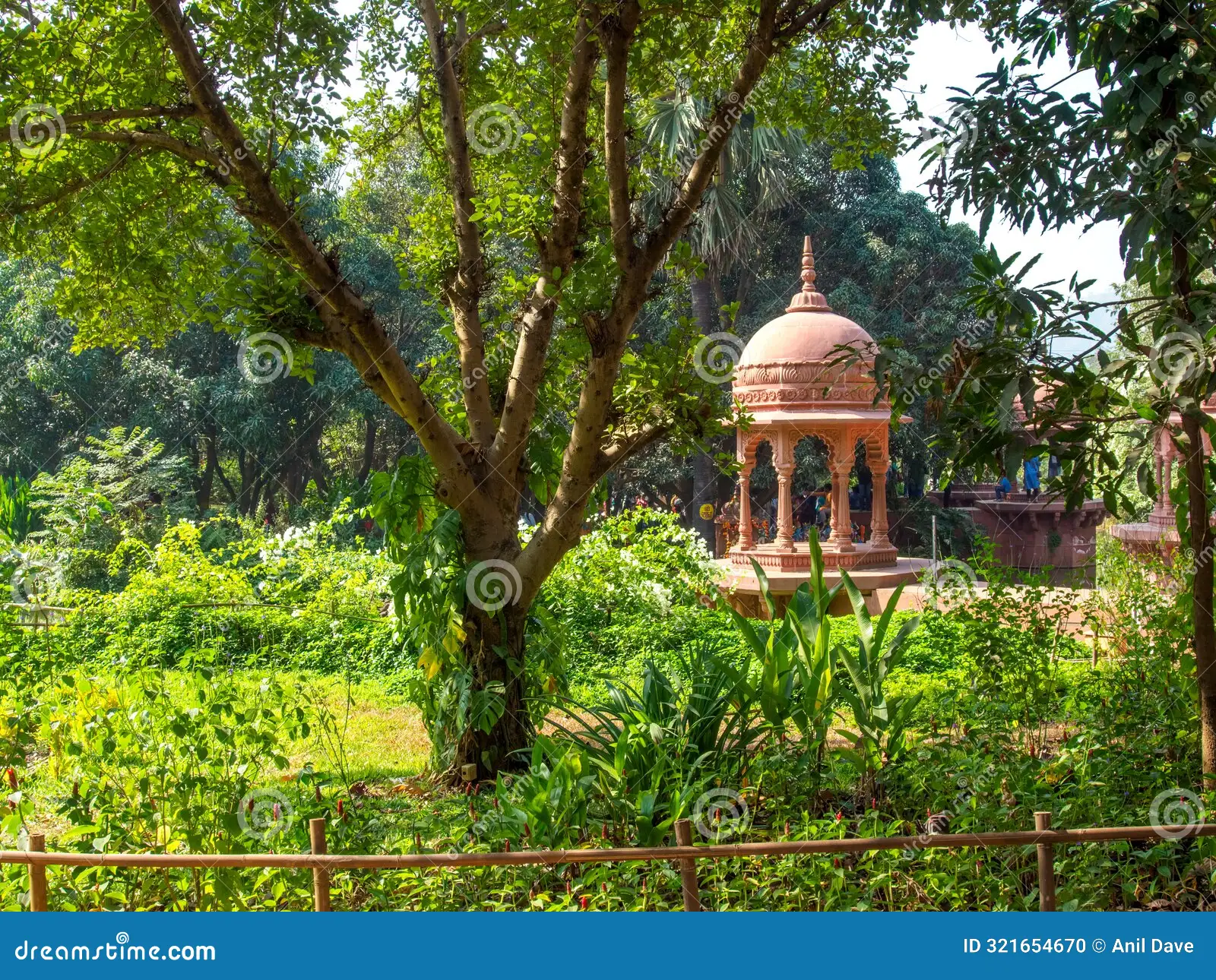
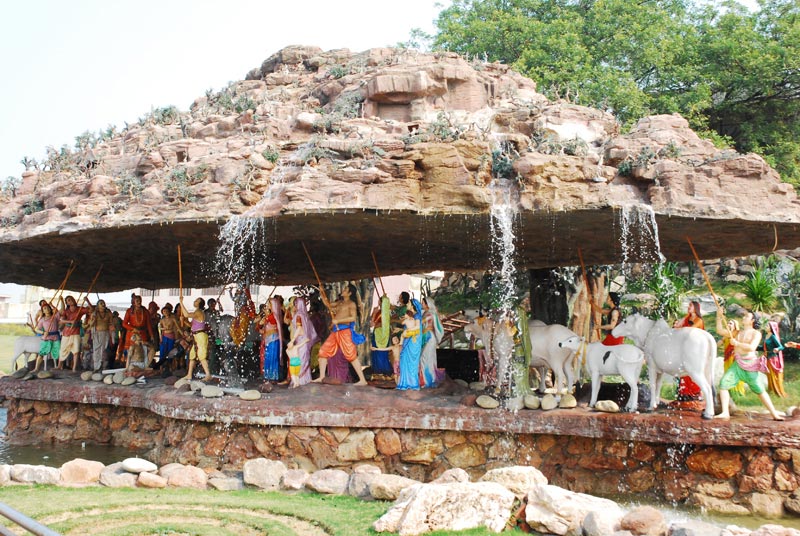
A landscaped mound built to represent Govardhan Hill, set among trimmed lawns and stone pathways on the temple grounds. Frame it from the garden path with the greenery in the foreground and the temple spires visible behind. Good for a change of texture from the marble-heavy shots elsewhere on site.
The grand staircase leading up to the ground-floor Radha-Krishna sanctum offers a strong vertical composition with carved balustrades on either side. Stand at the base looking up, or midway up looking back toward the fountain plaza. Popular for portrait shots against the white marble backdrop.
Booking Prem Mandir Vrindavan Tickets isn't required since entry is free, so families can focus purely on managing energy levels and comfort across two darshan windows rather than worrying about admission logistics. The wide marble courtyards give kids room to move and grandparents room to rest, but the evening crowd for the fountain show needs a plan.
The marble walkways and open gardens are flat and wheelchair-friendly, so a lightweight stroller rolls easily; avoid bulky frames since paths get dense with visitors near showtime.
Toddlers through grandparents manage comfortably given the level pathways and abundant garden benches, though very young children may find the evening crowd noise and lights overstimulating.
Onsite drinking water, shoe storage, and washrooms cover the basics, and staff-assisted wheelchairs are available at the entrance for elderly relatives who tire easily.
Visit the 08:30-12:00 morning session first for an unhurried temple walk with children, then return for 16:30-20:30 to catch the aarti and musical fountain while energy is fresh.
Claim a garden bench near the fountain area at least 30 minutes before the evening show starts, since standing room fills fast and there's no reserved seating.
Carry snacks for the wait, as the food stalls with vegetarian options sit outside the complex rather than within the darshan area itself.
Real experiences from real travelers
We reached around five in the evening and the heat was still sitting on the stone, but the marble stays cool under bare feet which surprised me. The carved panels around the outer corridor took us close to an hour on their own. Booking Prem Mandir Vrindavan Tickets ahead meant we skipped the queue that had built up near the shoe counter.
The whole structure changes colour every few minutes once the lights come on, and the fountain court fills up fast, so we staked out a spot along the railing early. Standing in the crowd hearing bhajans drift across the water was the part I keep thinking about. Water bottles are allowed inside which mattered in that heat.
My grandmother wanted to see the Raas Leela reliefs and she was not disappointed — the detail on the Govardhan Hill grotto is extraordinary up close. There is a lot of open ground between the entrance and the shikhara, so wear something on your feet until the shoe deposit. The Vrindavan temple tour we joined explained the leela scenes properly.
Went on a Sunday which was a mistake — the circumambulation path was shoulder to shoulder for the first thirty minutes. Once the crowd thinned out the scale of the place registered properly, especially the height of the central spire against the sky. Our Prem Mandir Vrindavan Tickets tickets were checked quickly at the gate, no fuss.
We arrived not long after opening when the light was still soft and there were maybe forty people on the whole grounds. Birds in the surrounding gardens, marble almost cold, no queues anywhere. Completely different atmosphere from what friends had described from the evening.
I expected one temple and instead found an entire complex of landscaped gardens with life-size figures of Krishna and the gopis scattered through them. The Govardhan Leela section held our attention longer than the main shrine did. Among Vrindavan landmarks this felt the most photogenic without trying to be.
Came in early July between showers and the wet marble reflected the sky in a way I have not seen elsewhere in Braj. Fewer visitors than the winter months, which made the outer corridor genuinely peaceful. The Prem Mandir Vrindavan Tickets tours running from the Mathura side are convenient if you do not have your own transport.
From the road it looks manageable and then you walk the perimeter and realise how much ground it covers. Late November afternoon light on the white stone was the softest we saw anywhere in Uttar Pradesh. Prem Mandir mandir darshan felt unhurried compared to the older temples in town.
Parking took longer than expected and the walk from the lot in September humidity was not pleasant. The temple itself justified the effort, particularly the inlay work near the inner sanctum entrance. Skip-the-line Prem Mandir entry is worth arranging if you are visiting on a weekend or festival day.
Saw it in daylight on our first day and returned for the evening illumination two days later, and honestly both were worth it for different reasons. The carved storytelling on the exterior only makes sense when you can actually see it in sun. Prem Mandir Vrindavan Tickets were straightforward to sort out both times.
Everything you need to know for your journey
Prem Mandir is open daily from 08:30–12:00 and again from 16:30–20:30, with no variation across the week.
No, entrance to Prem Mandir is completely free, with no admission charge for Indian or foreign visitors.
The temple is located at Sri Kripalu Maharaj Ji Marg, Raman Reiti, Vrindavan, Uttar Pradesh 281121, India.
Yes, the courtyard and garden paths are largely level with ramped sections, though the site can feel crowded for wheelchair users during the busiest evening hours.
Large backpacks, outside food, alcohol, tobacco, drones, tripods in the sanctum, and pets are among the items not permitted on the grounds.
Photography is allowed across the outer courtyard and gardens, which is where most visitors capture the marble facade, but it is restricted inside the inner sanctum.
The recommended arrival window for a Prem Mandir Vrindavan Tickets visit is 16:30–18:00, since evening aarti and the musical fountain draw the best atmosphere before peak crowds build.
Modest clothing covering shoulders and knees is expected, and footwear must be removed before entering the marble courtyard.
No food stalls operate inside the complex and eating is not permitted in the courtyard or sanctum, though small water bottles are generally fine.
Visitors typically travel by car or taxi from Mathura Junction, about 20-25 minutes away, or take a UPSRTC bus from Delhi followed by a short local transfer.
Yes, the gardens and musical fountain make Prem Mandir a popular stop for a family Vrindavan landmarks tour, and children are welcome throughout the grounds.
Yes, nearby sites like ISKCON Temple and Banke Bihari Temple sit within a short drive, making it easy to build a fuller Vrindavan temples circuit around a Prem Mandir Vrindavan Tickets tour.
A Krishna-Radha temple known for daily kirtans and a calm garden setting, popular alongside a Prem Mandir Vrindavan Tickets visit.
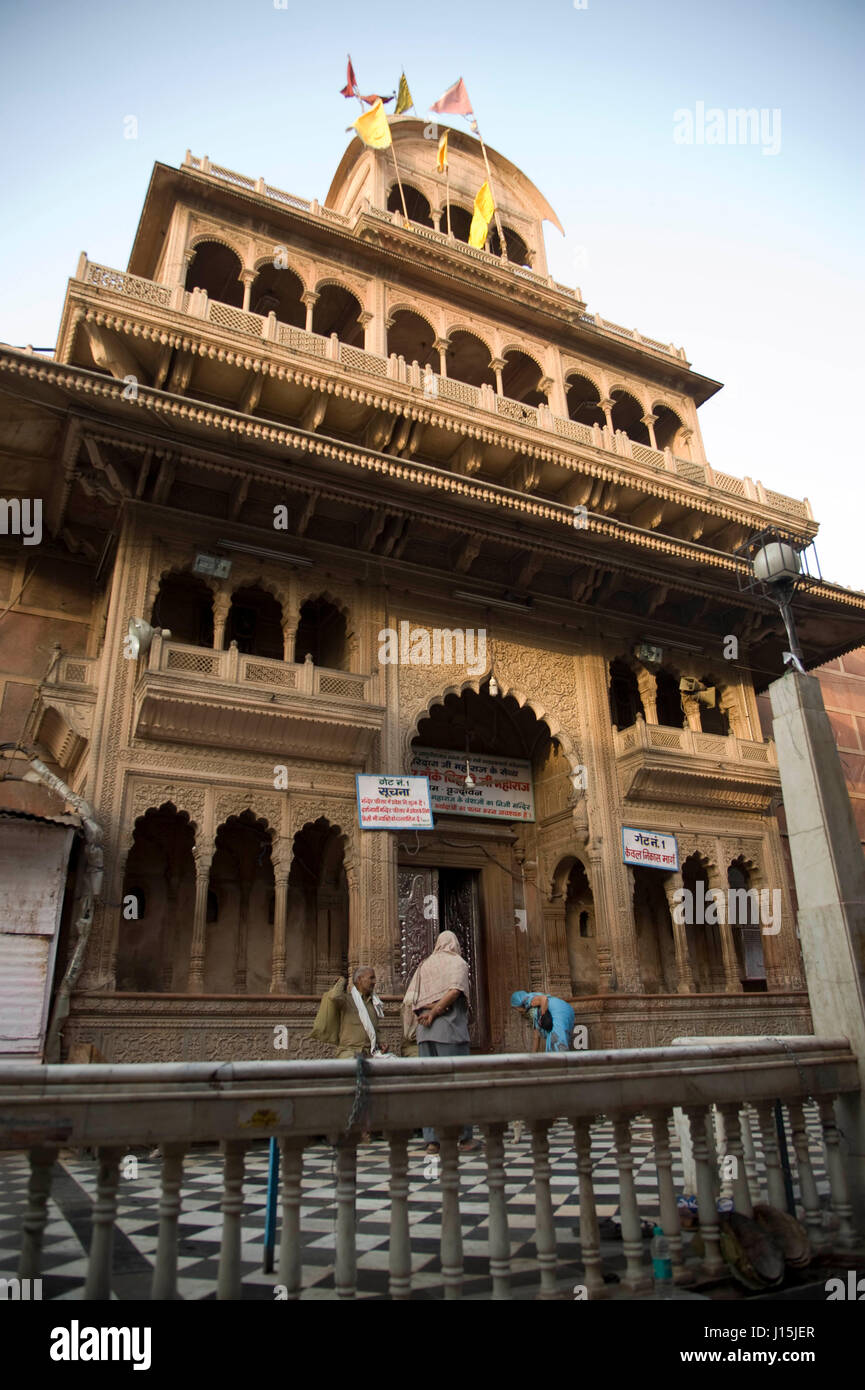
One of Vrindavan's oldest and most revered shrines, located in the old town's narrow lanes.
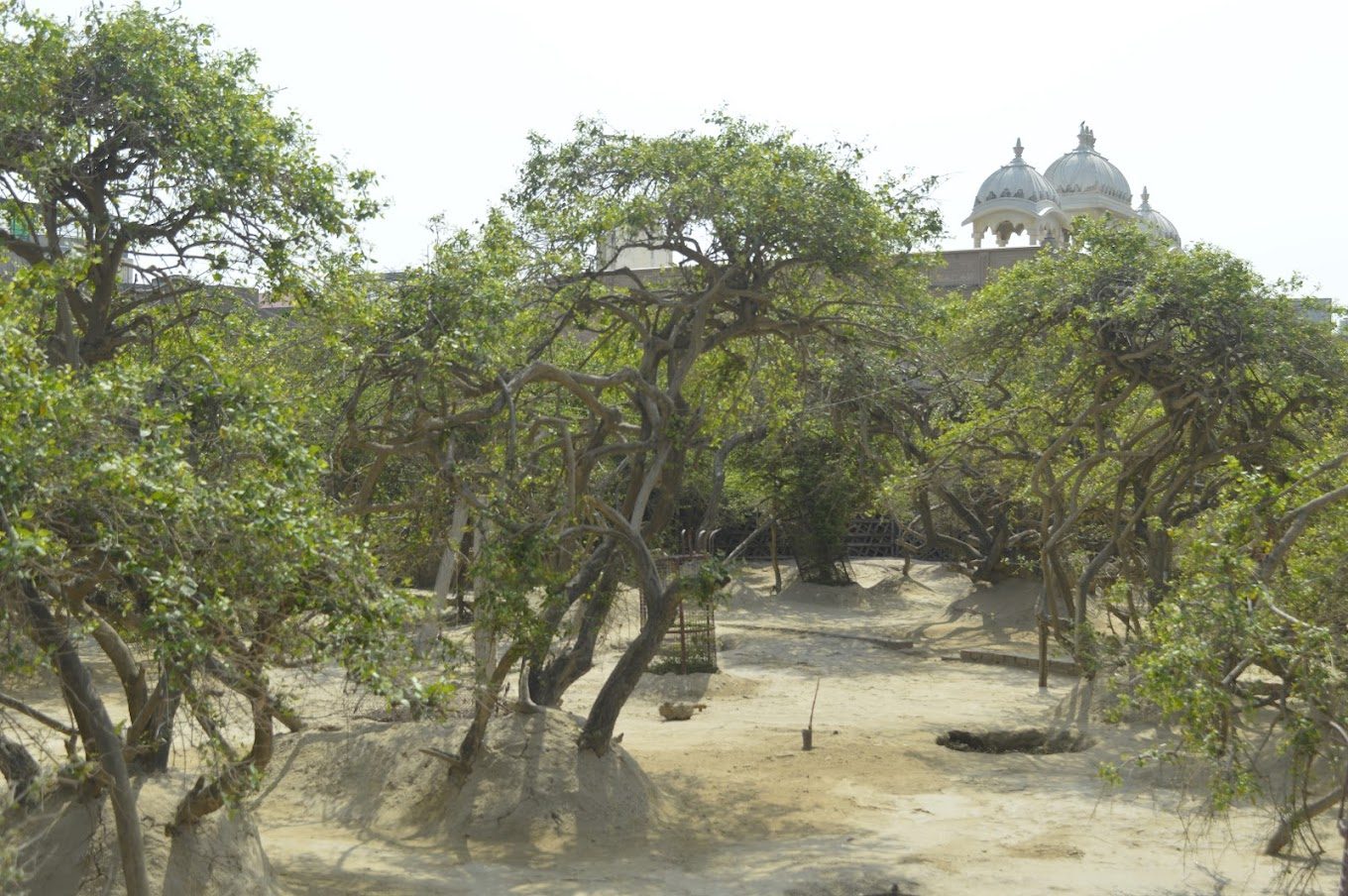
A shaded grove associated with Krishna and Radha's Raas Leela, popular for quiet evening walks.
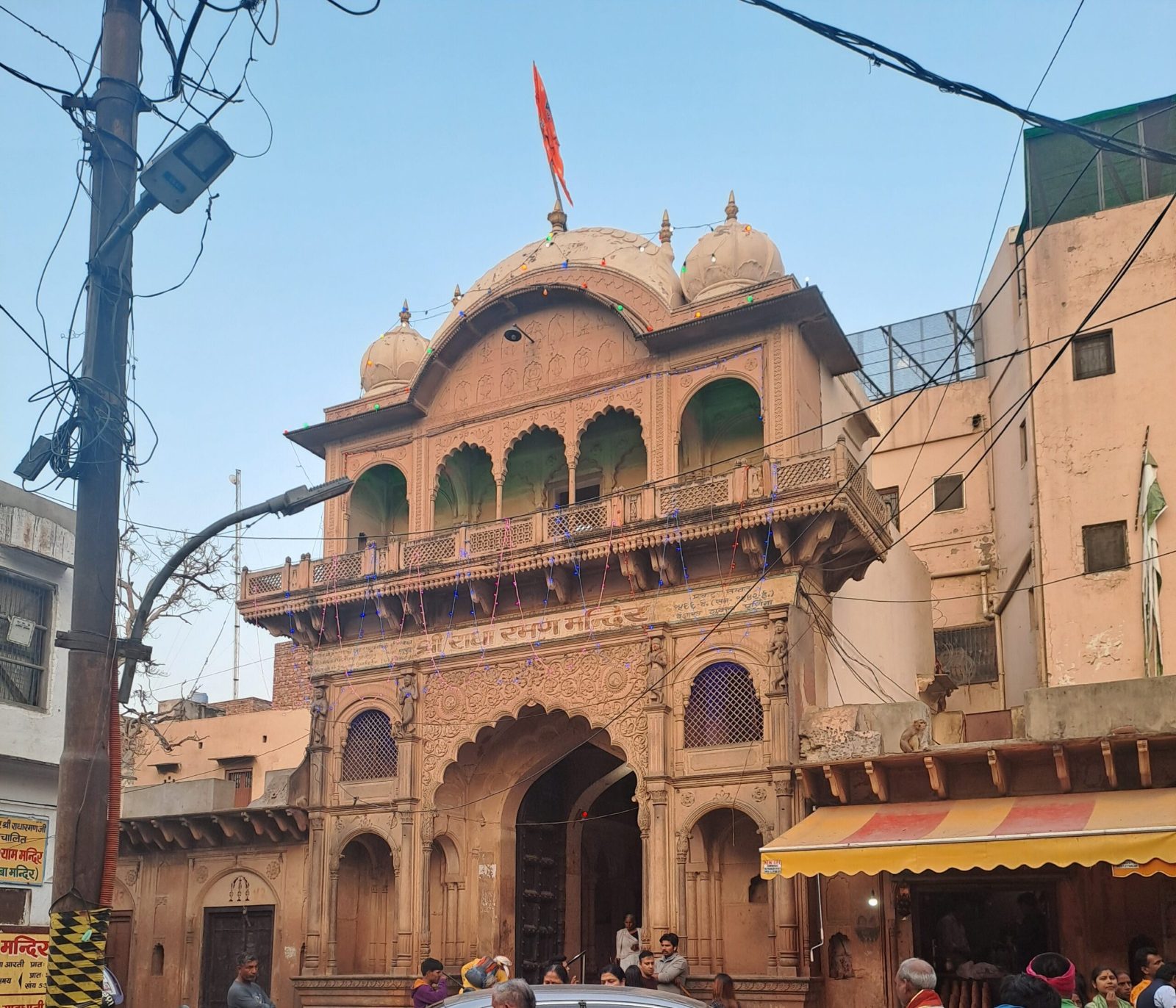
A historic 16th-century temple near Banke Bihari, worshipping Krishna as Radha Raman.
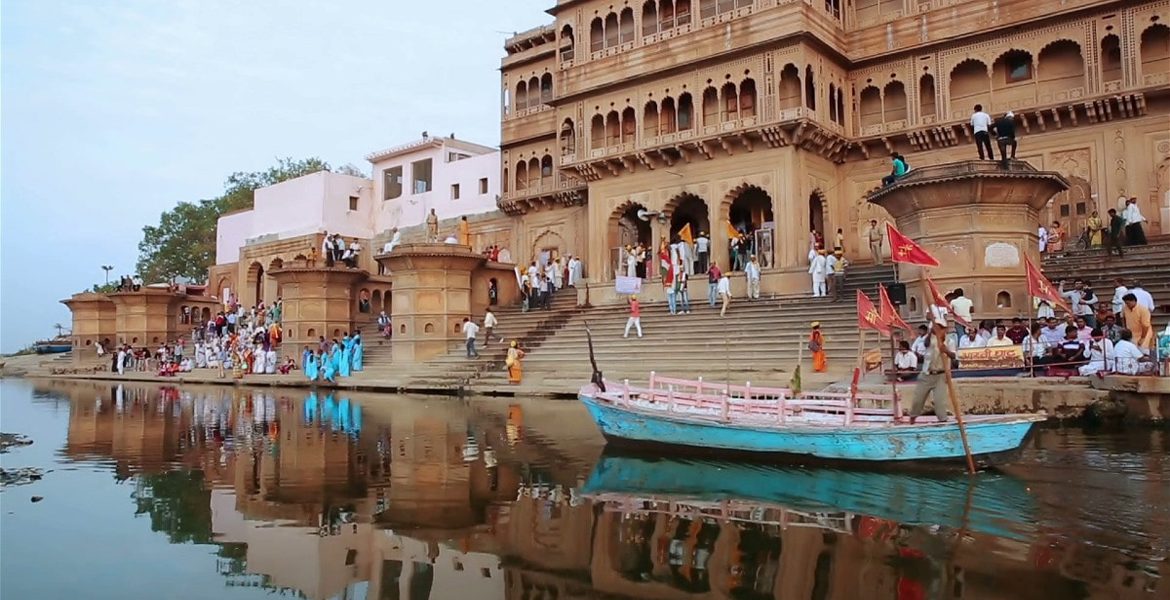
A riverside ghat on the Yamuna known for sunset aarti and boat rides.
A full-service hotel positioned within walking distance of Prem Mandir, popular with families and tour groups.
The immediate neighborhood around the temple with a mix of guesthouses and mid-range lodges.
A cluster of budget and mid-range hotels near Banke Bihari and the old town markets.
Simple pilgrim lodgings scattered across Vrindavan, often run by local trusts.
Join thousands of happy travelers who have discovered this incredible experience
Book Your Experience Now